Dike Blair Messages to the Public
About the Exhibition
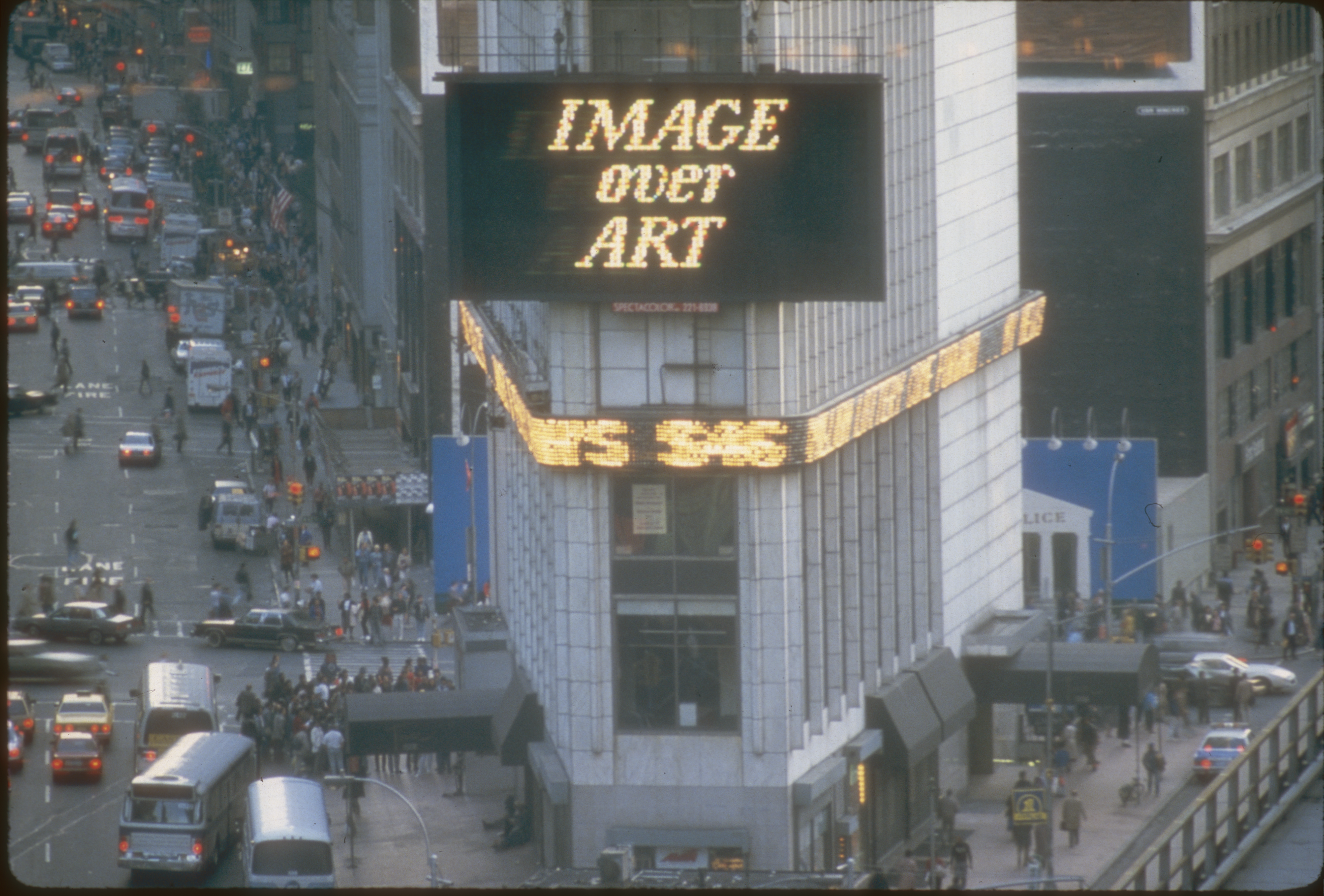
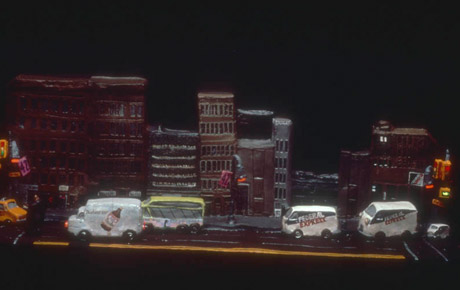
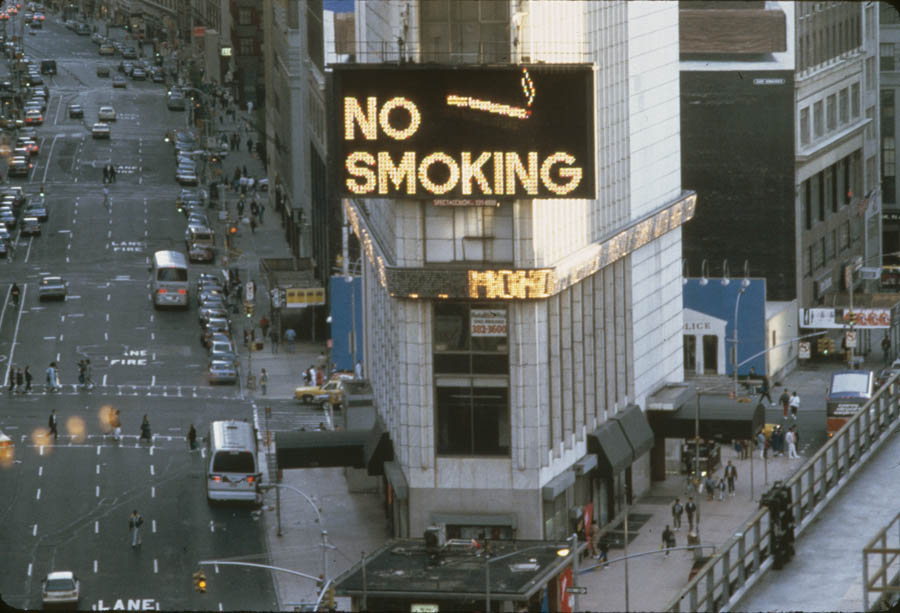
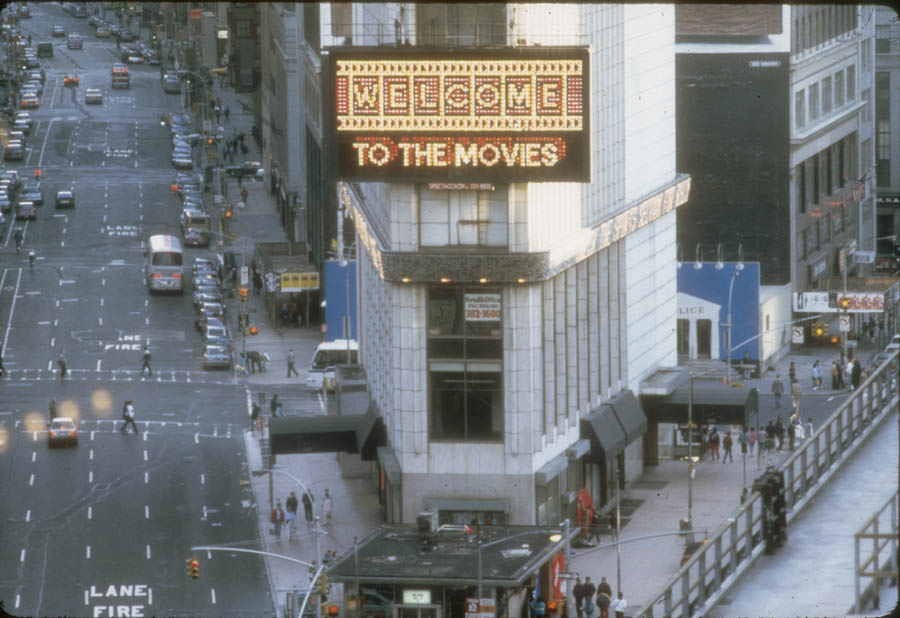
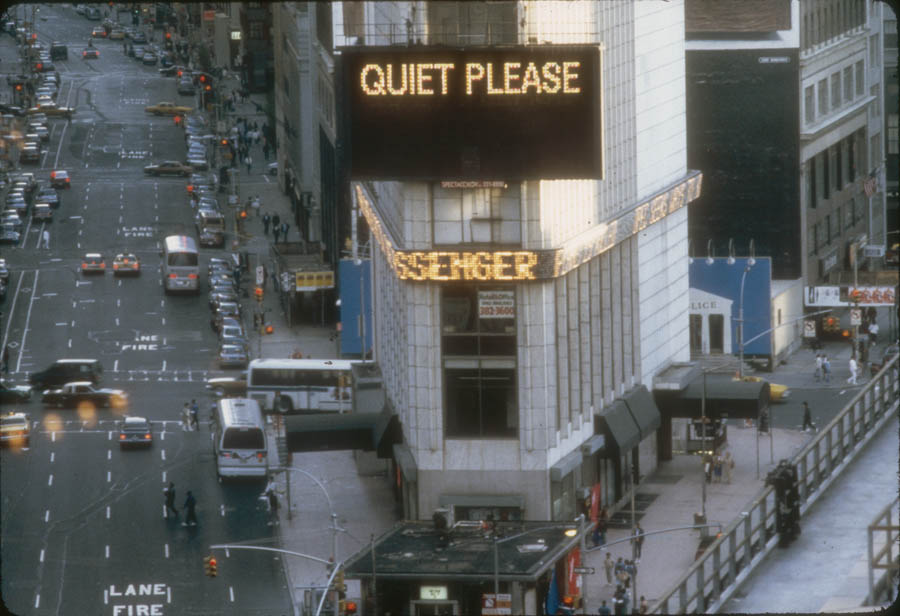
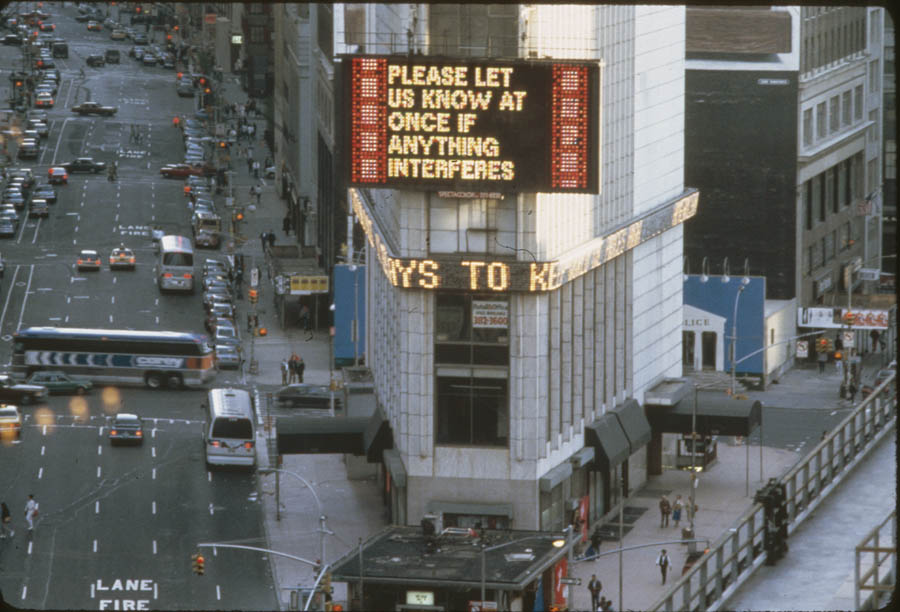
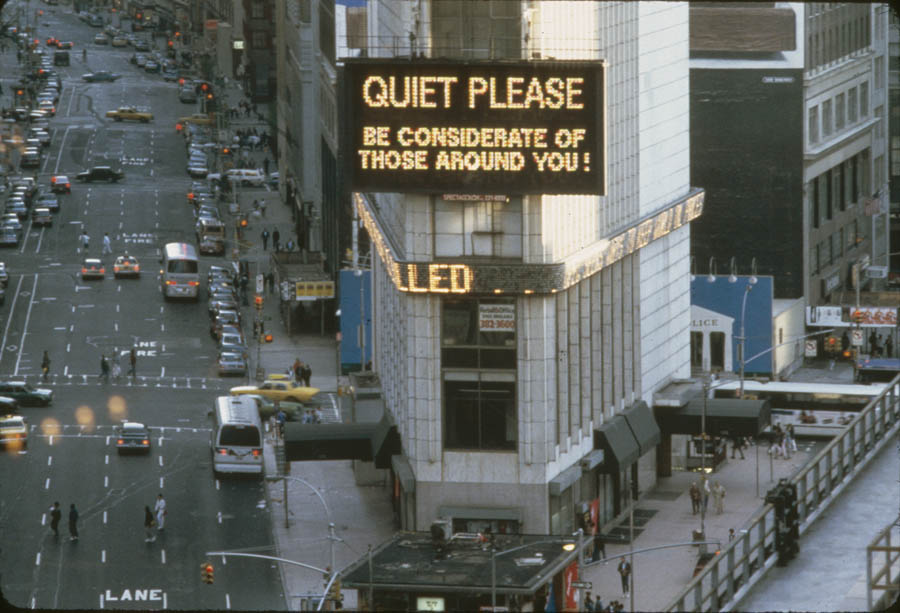
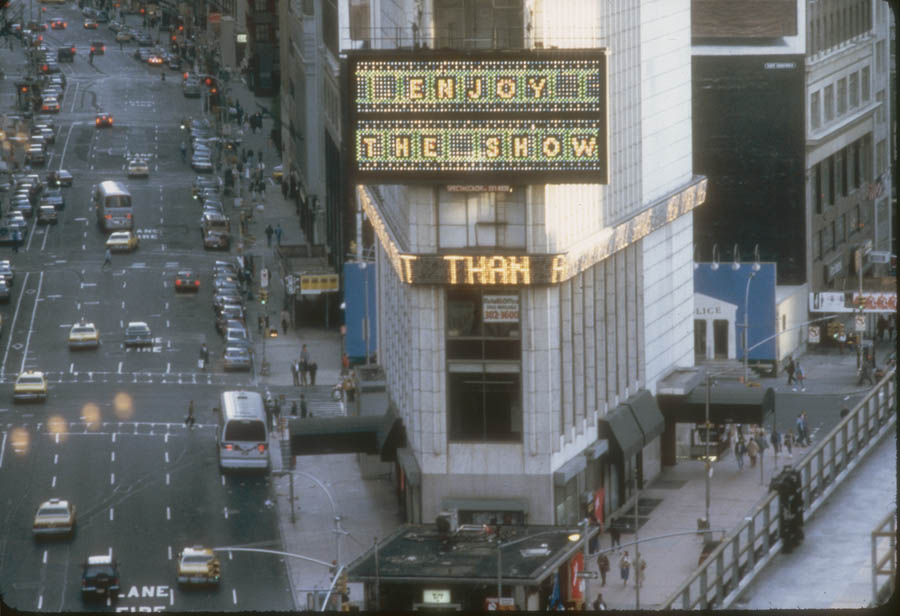
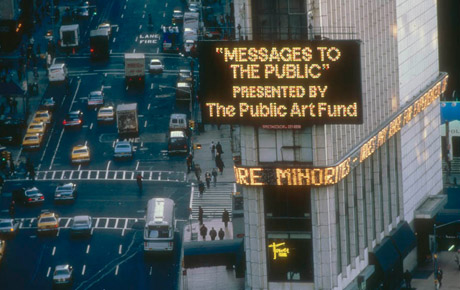
Dike Blair (b. 1952, New Castle, PA) has taken the text and images of his message directly from a short film often shown in movie theaters prior to the main feature. The bright and constantly changing graphics welcome us to the “show,” admonish us to be quiet and considerate of those around us, to properly dispose of our trash, and to refrain from smoking. They beckon us to the refreshment stands and ask us to notify the management if anything interferes with our enjoyment of the show.
Blair says his message was inspired by the Times Square area. With its cavernous space and Spectacolor screen at one end, it reminds him of a movie theater. He feels that the frenetic pace of Times Square activity generates a less than considerate mood among the many people who pass through the area daily, and he therefore likes the contextual irony of this very caring and somewhat solicitous message.
Photo Gallery
About the Series
Messages to the Public formed a key part of the Public Art Fund’s long-term commitment to media-based artworks. Running from 1982 to 1990, the show featured a series of artists’ projects created specifically for the Spectacolor board at Times Square.
As Russell Miller from Ohio newspaper The Toledo Blade explained in his article on February 19, 1984, “every month, a different artist presents a 30-second animation on the Spectacolor light board—an 800-square-foot array of 8,000 red, white, blue, and green 60-watt bulbs that dominates the Times Square vista. The spot is repeated more than 50 times a day for two weeks, wedged into a 20-minute loop of computer-animated commercials.
“Jane Dickson, a painter, was working for Spectacolor, Inc. as an ad designer and computer programmer when, three and a half years ago, she first thought to use the light board to display noncommercial art.
“‘I picked that title,’ she said of Messages to the Public, ‘because I thought the propaganda potential from this project was terrific.’ The board, she noted, was regularly used for ‘commercial propaganda.’
“Dickson sought help from the Public Art Fund, an organization based here and dedicated to taking art out of the galleries and placing it in the city’s streets and parks.”
Project Director of the Public Art Fund Jessica Cusick explained, “We’re trying to do art that’s timely, has a message, is visually potent and is trying to deal with the fine line dividing fine art and commercial art.”
Related Exhibitions

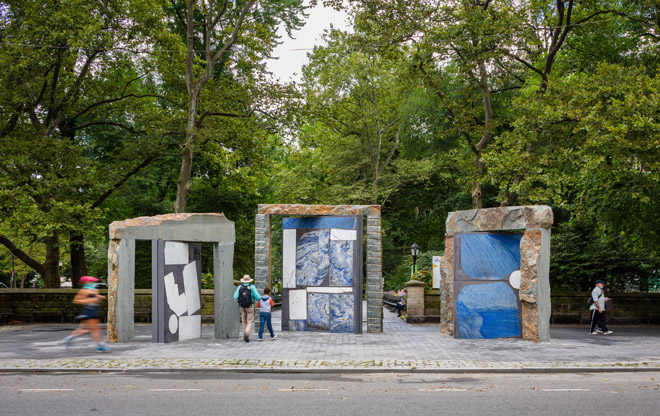
Originally on view at Doris C. Freedman Plaza, Central Park