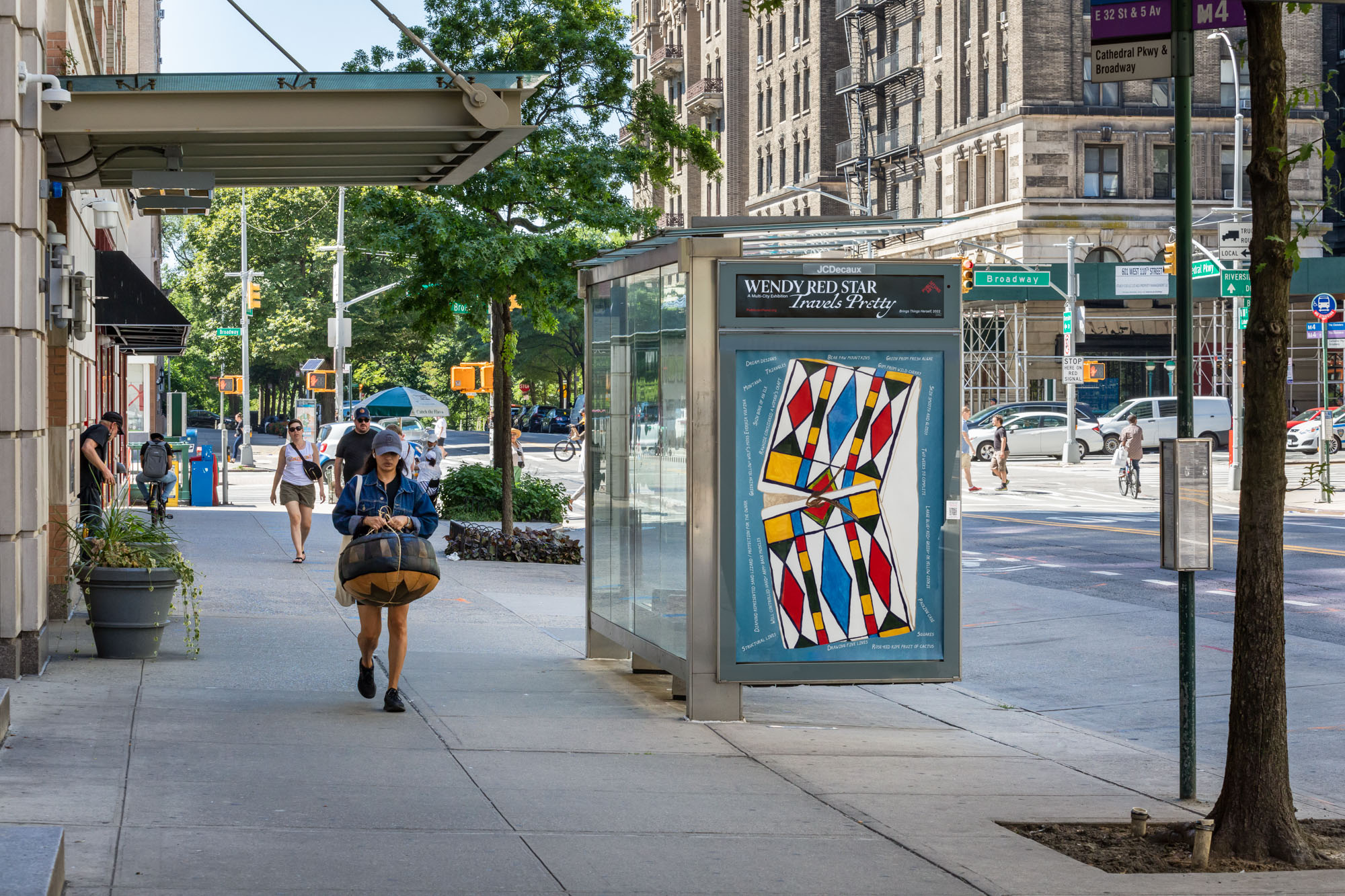
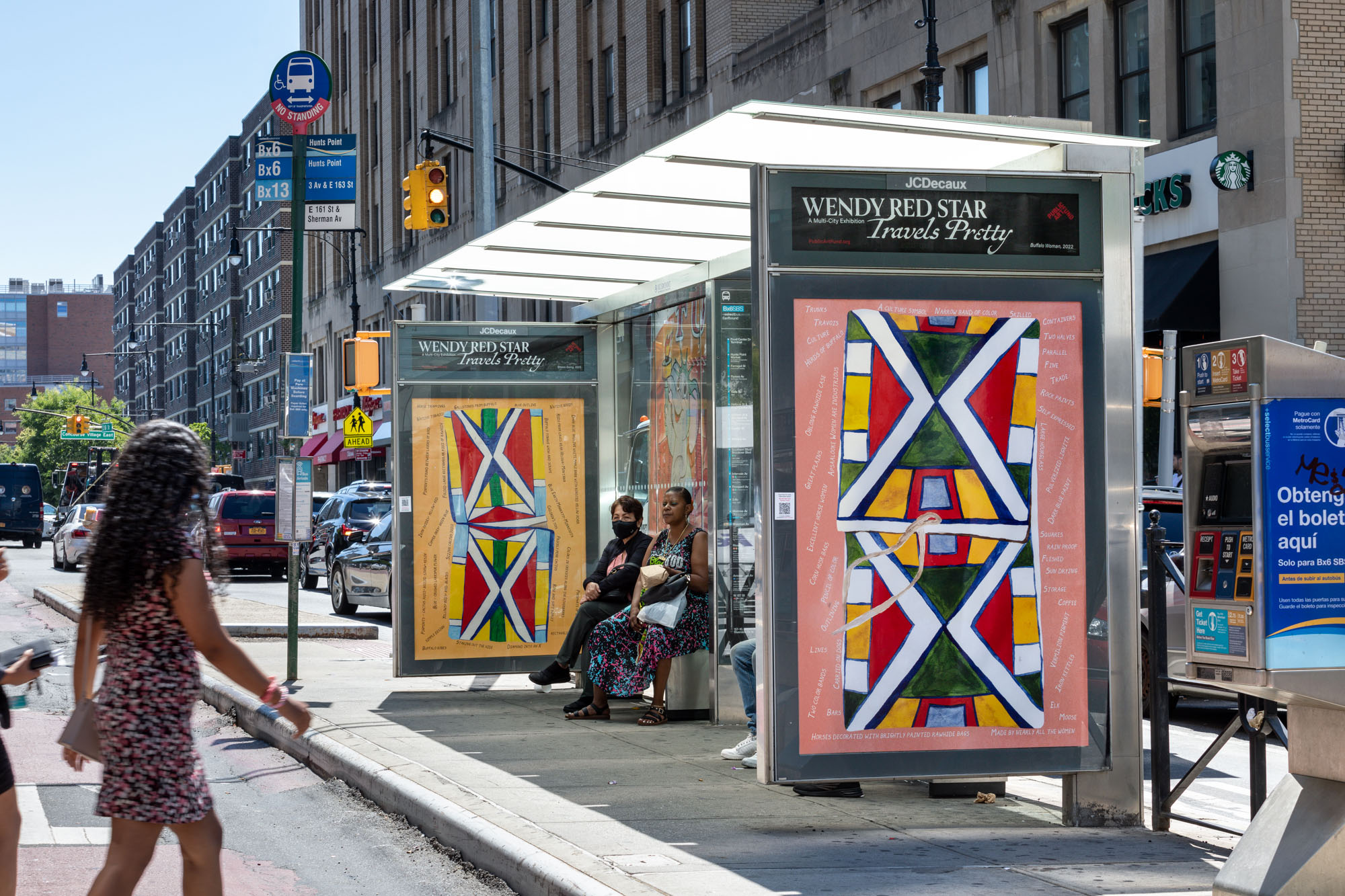
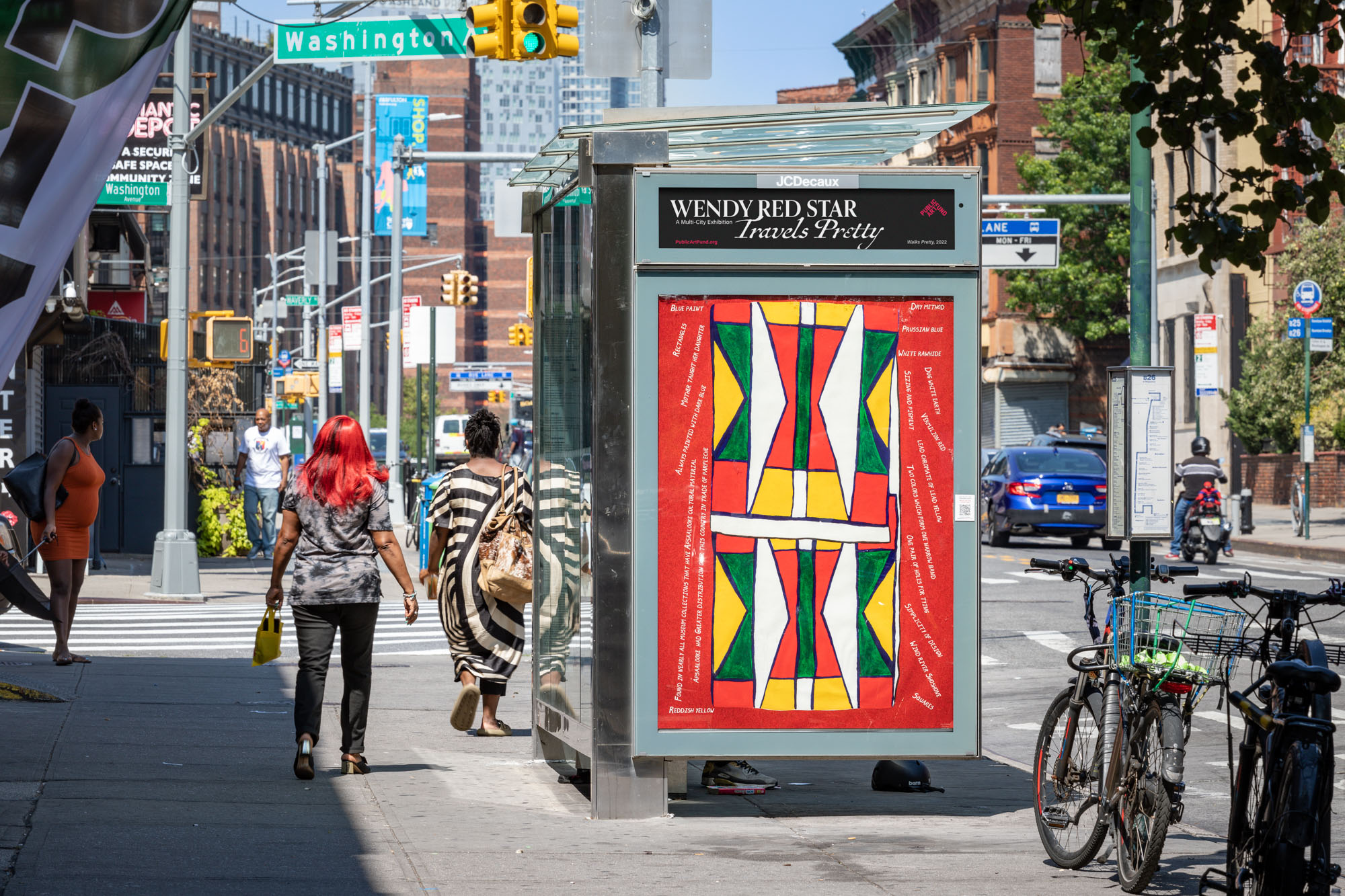
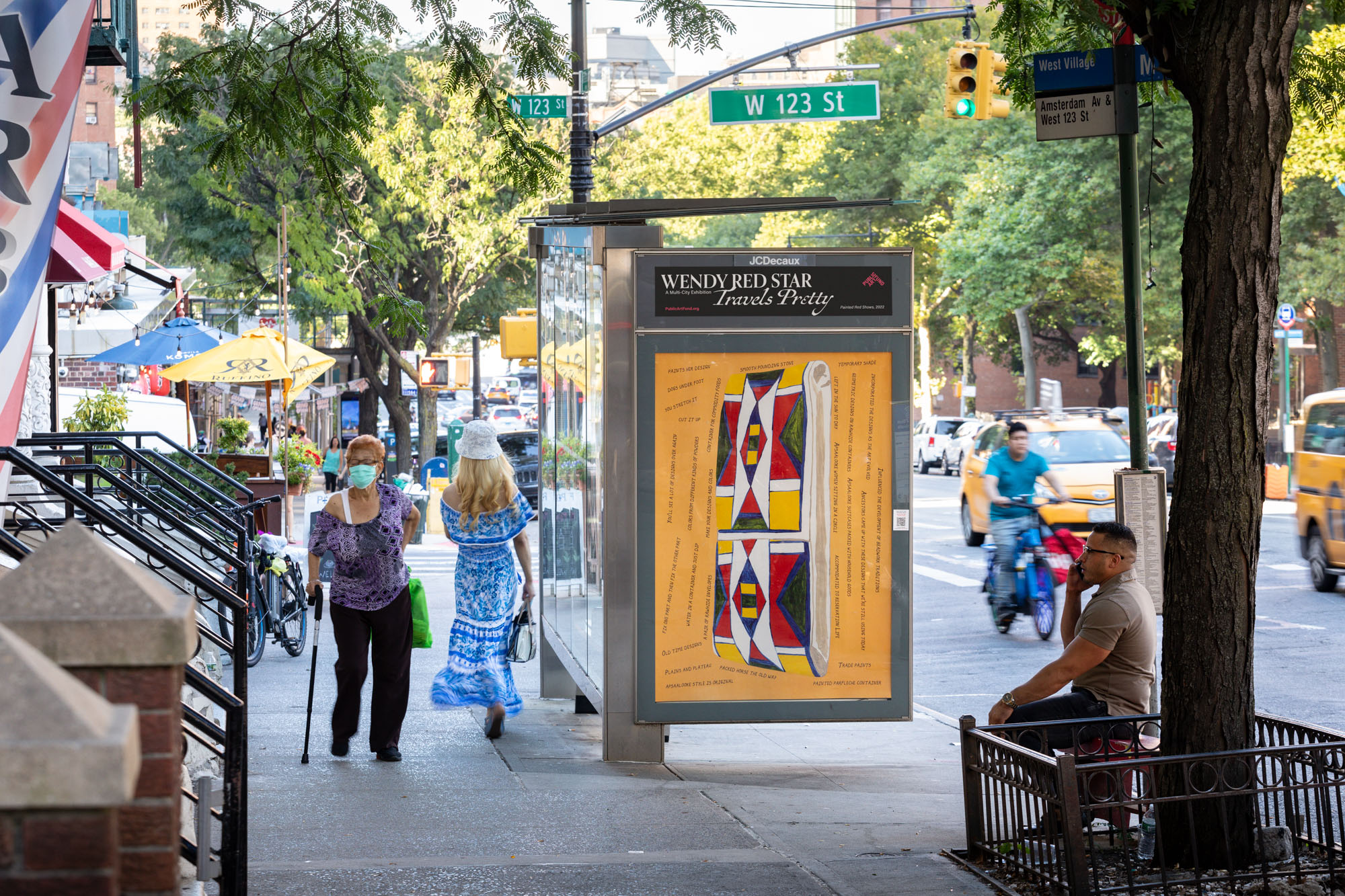
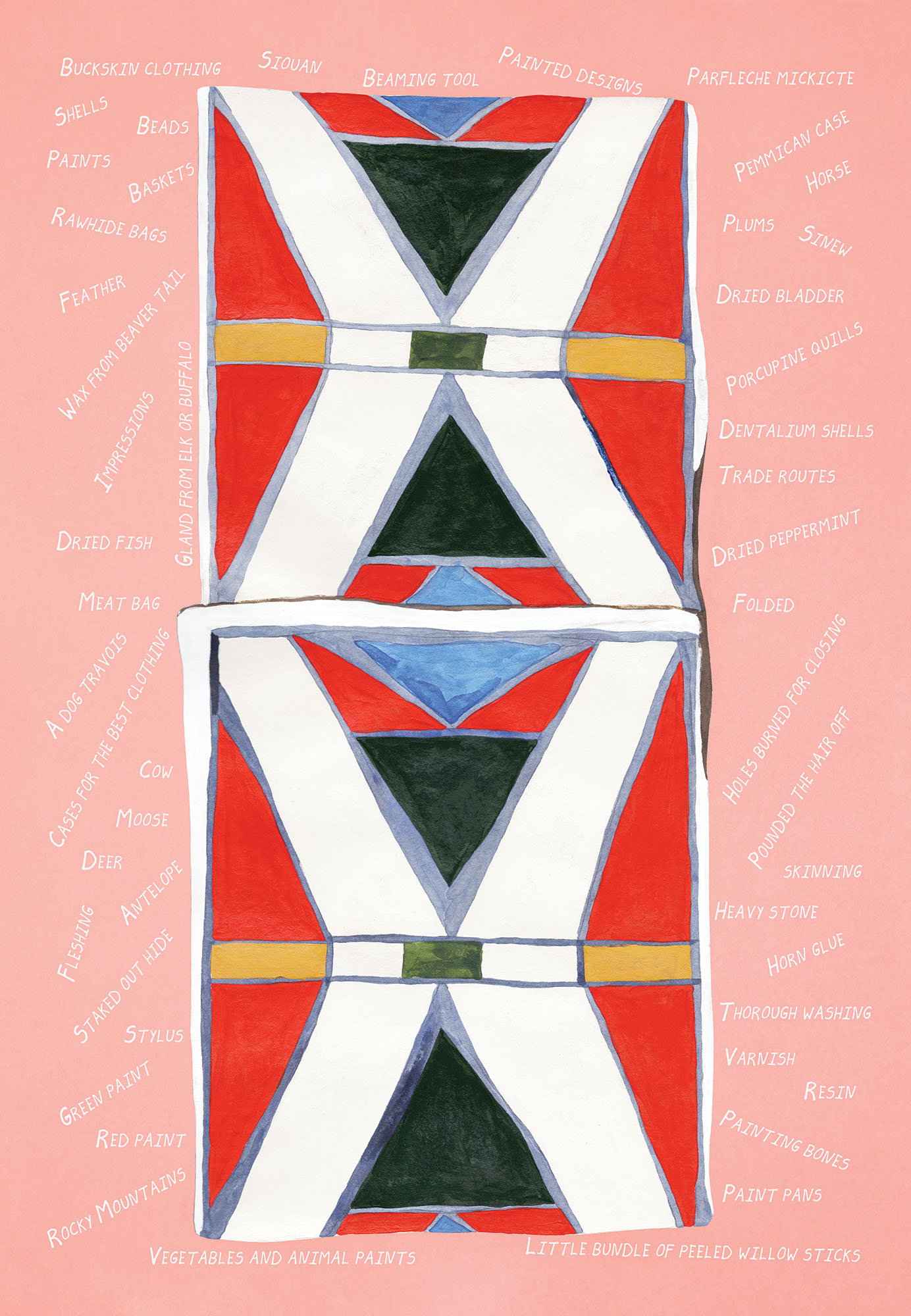
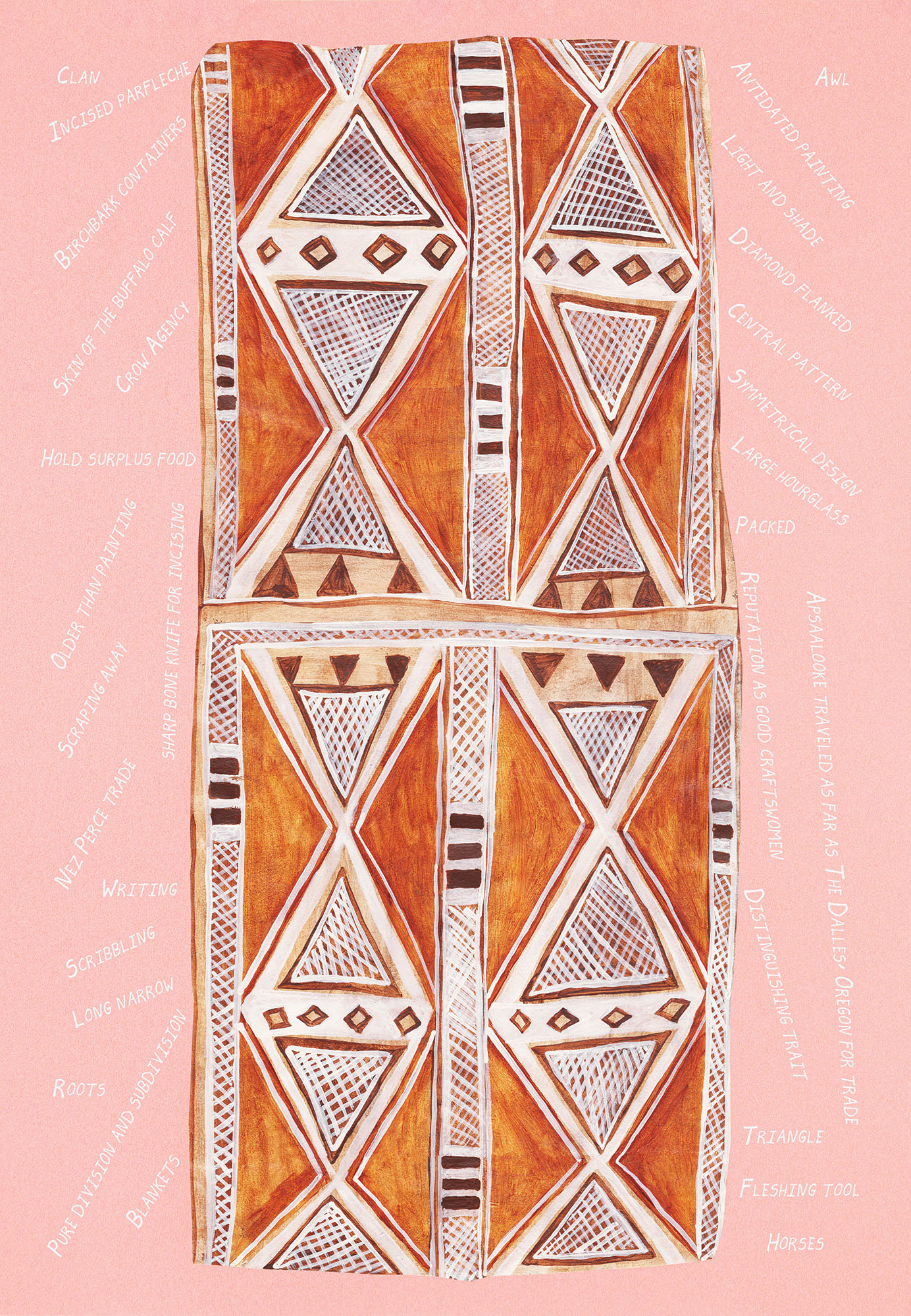
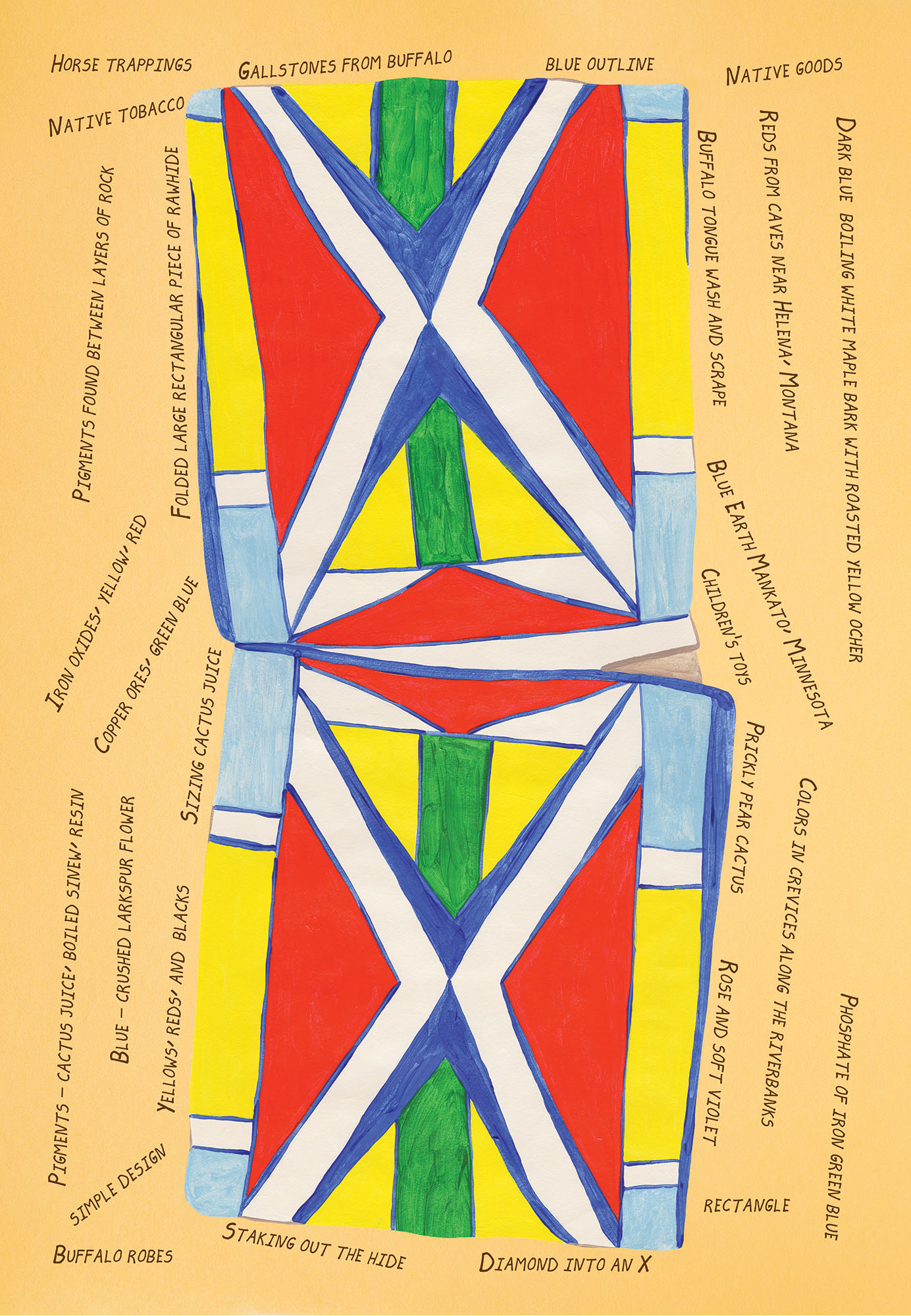
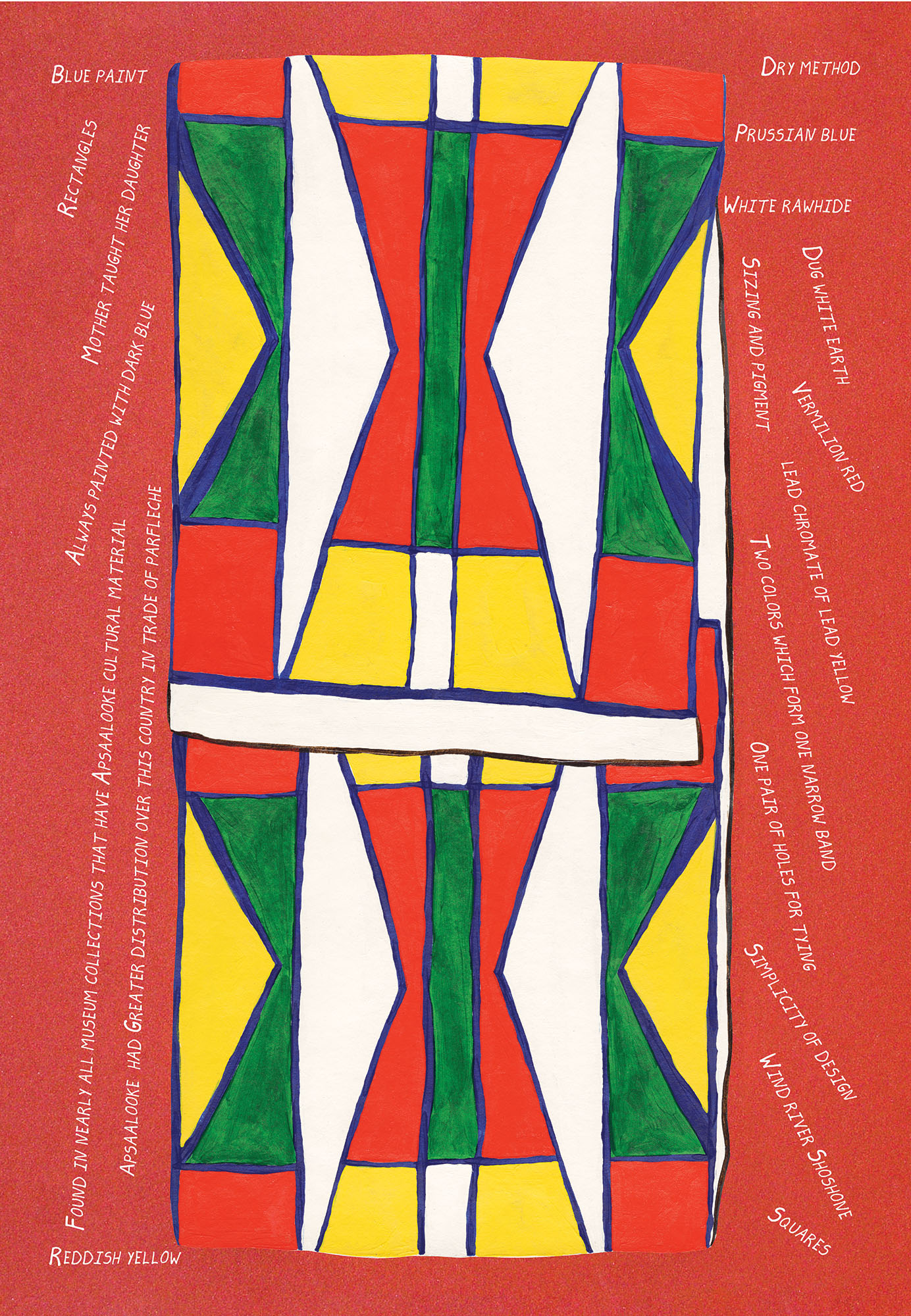
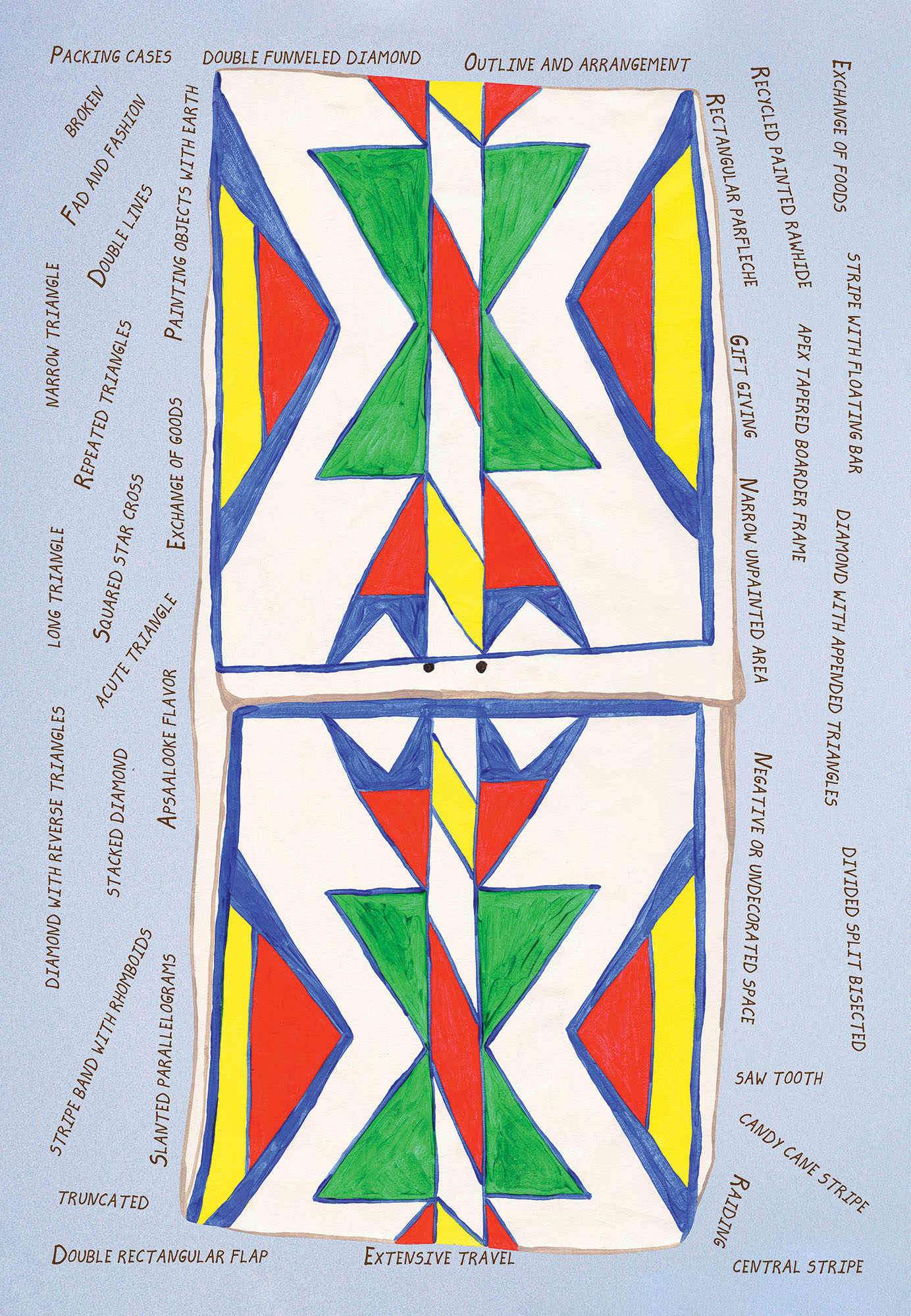
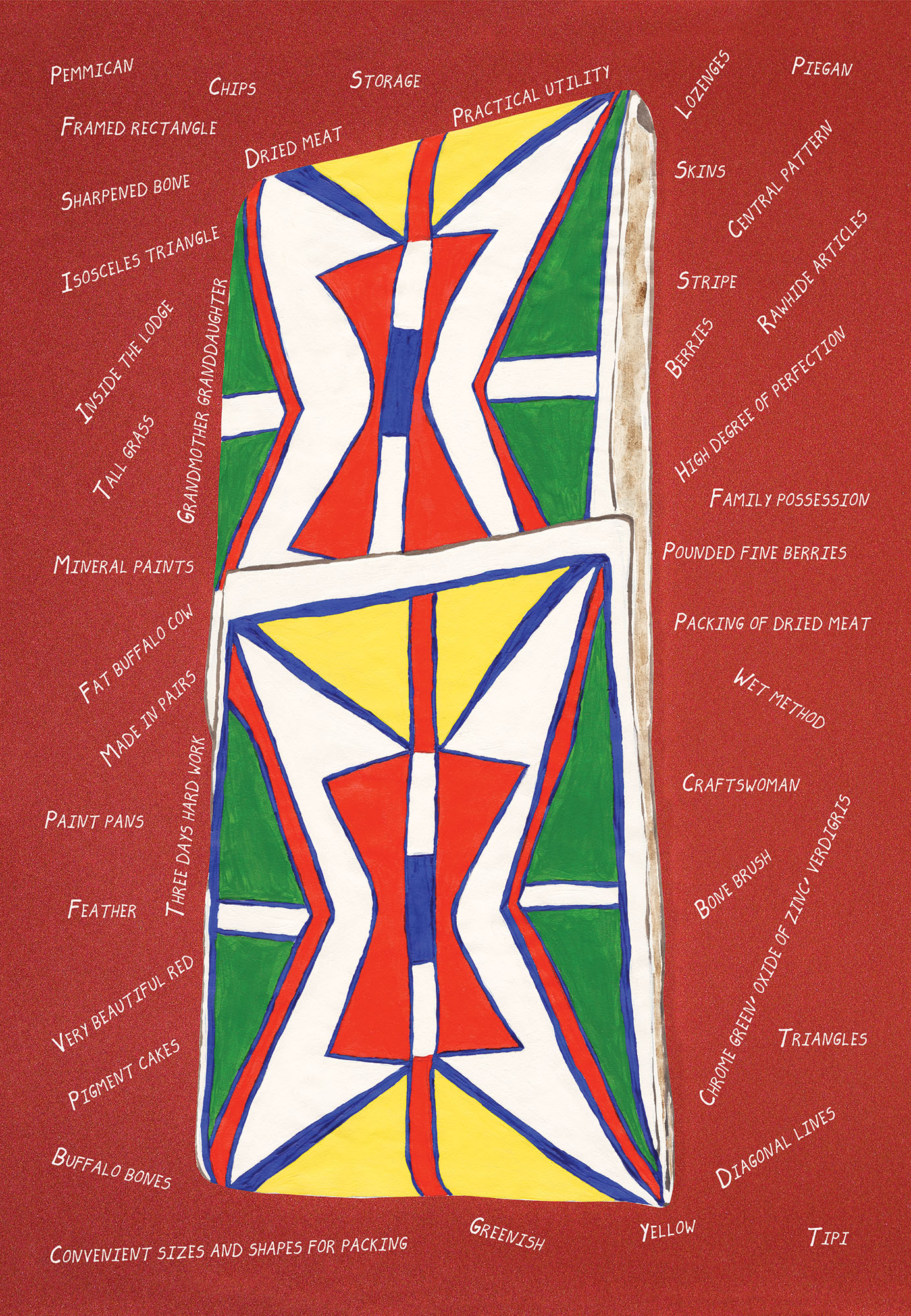
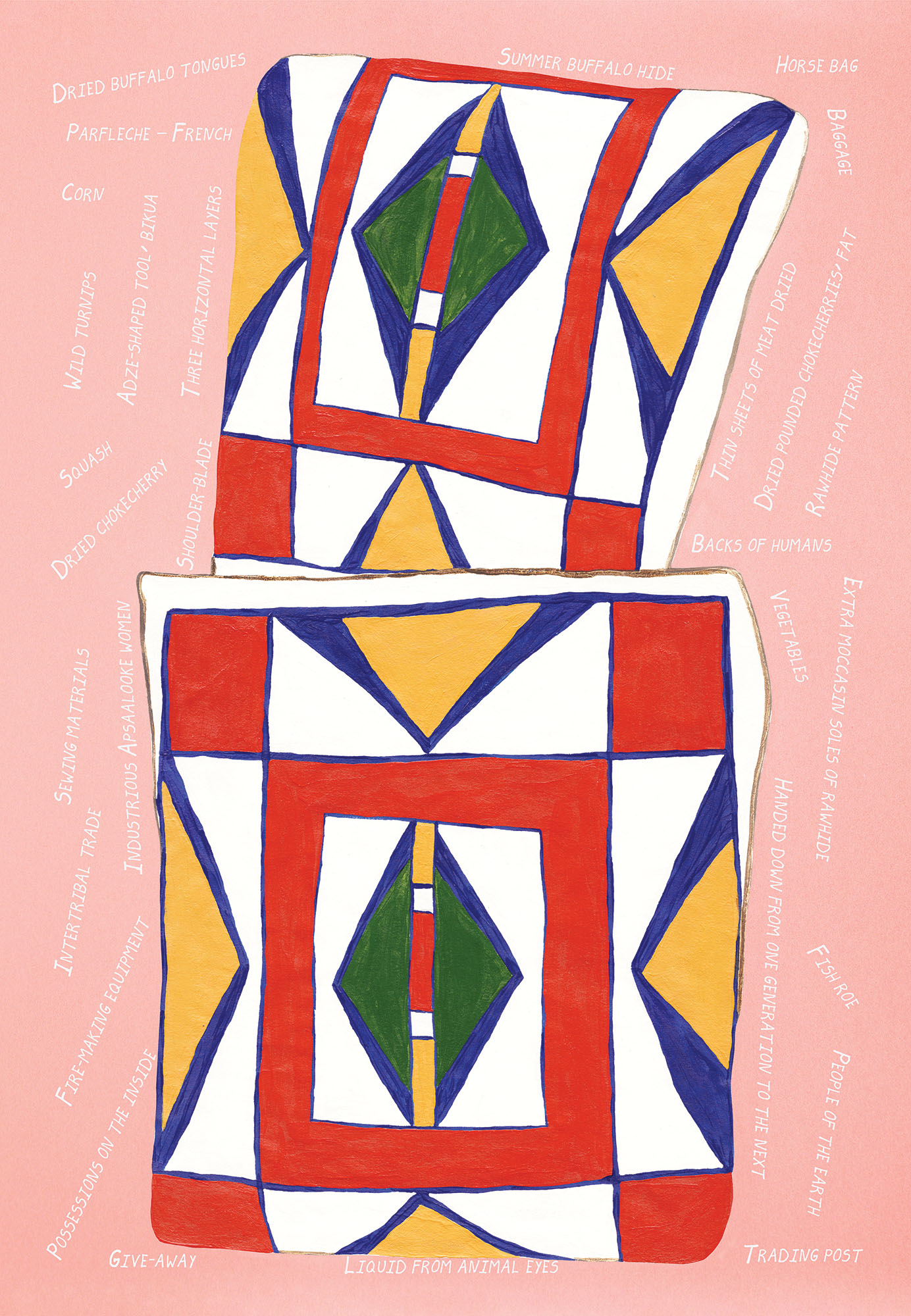
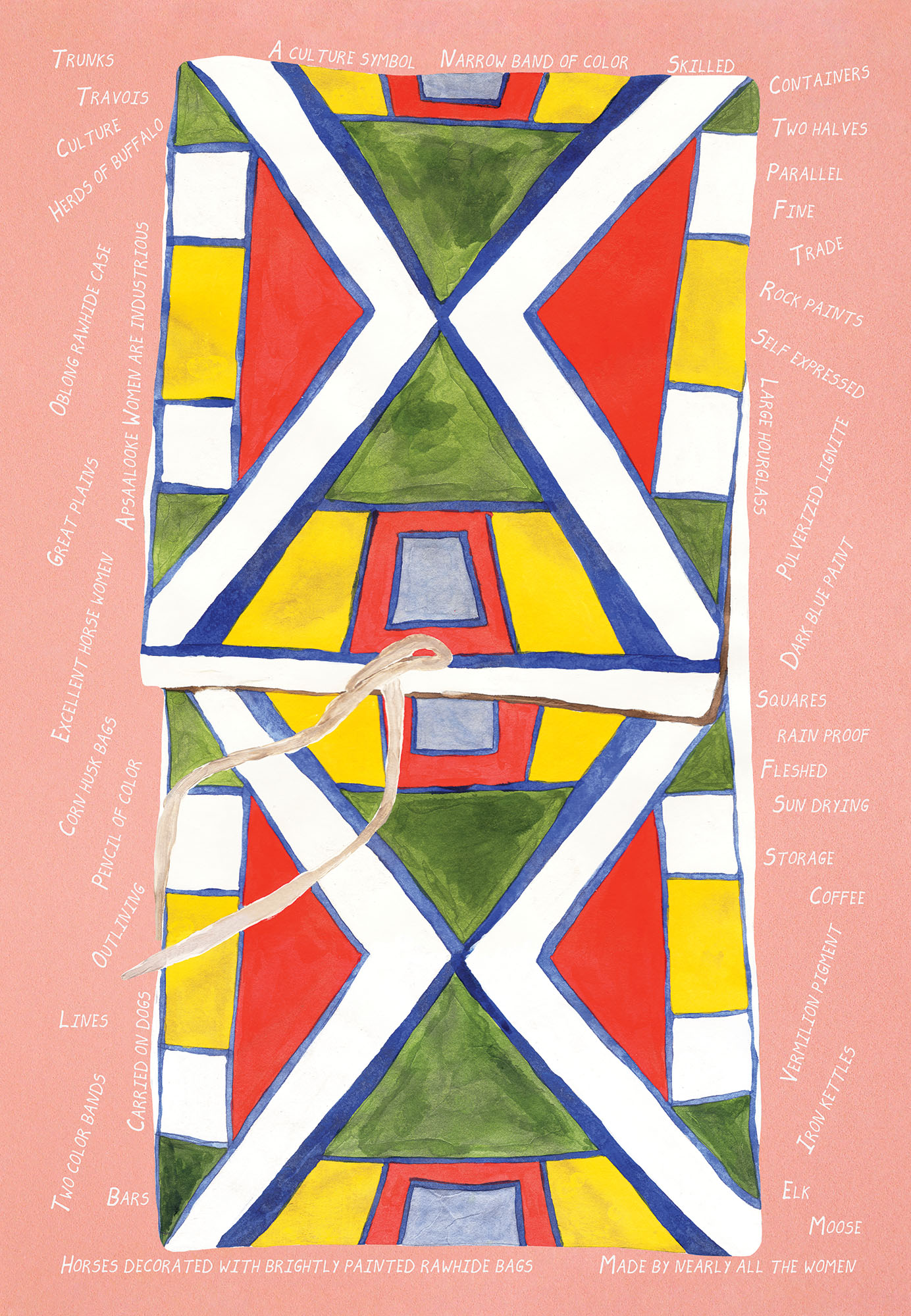
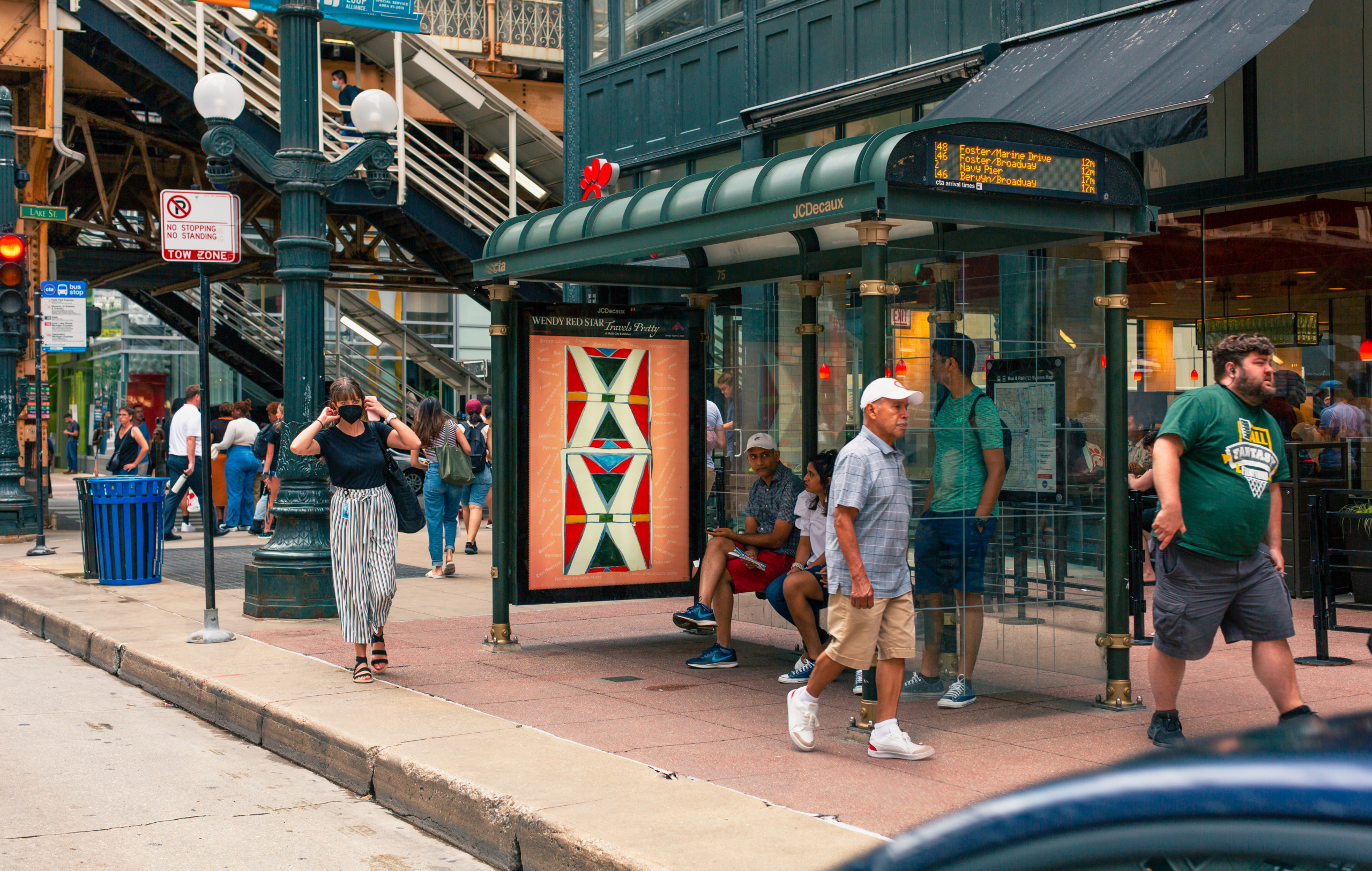
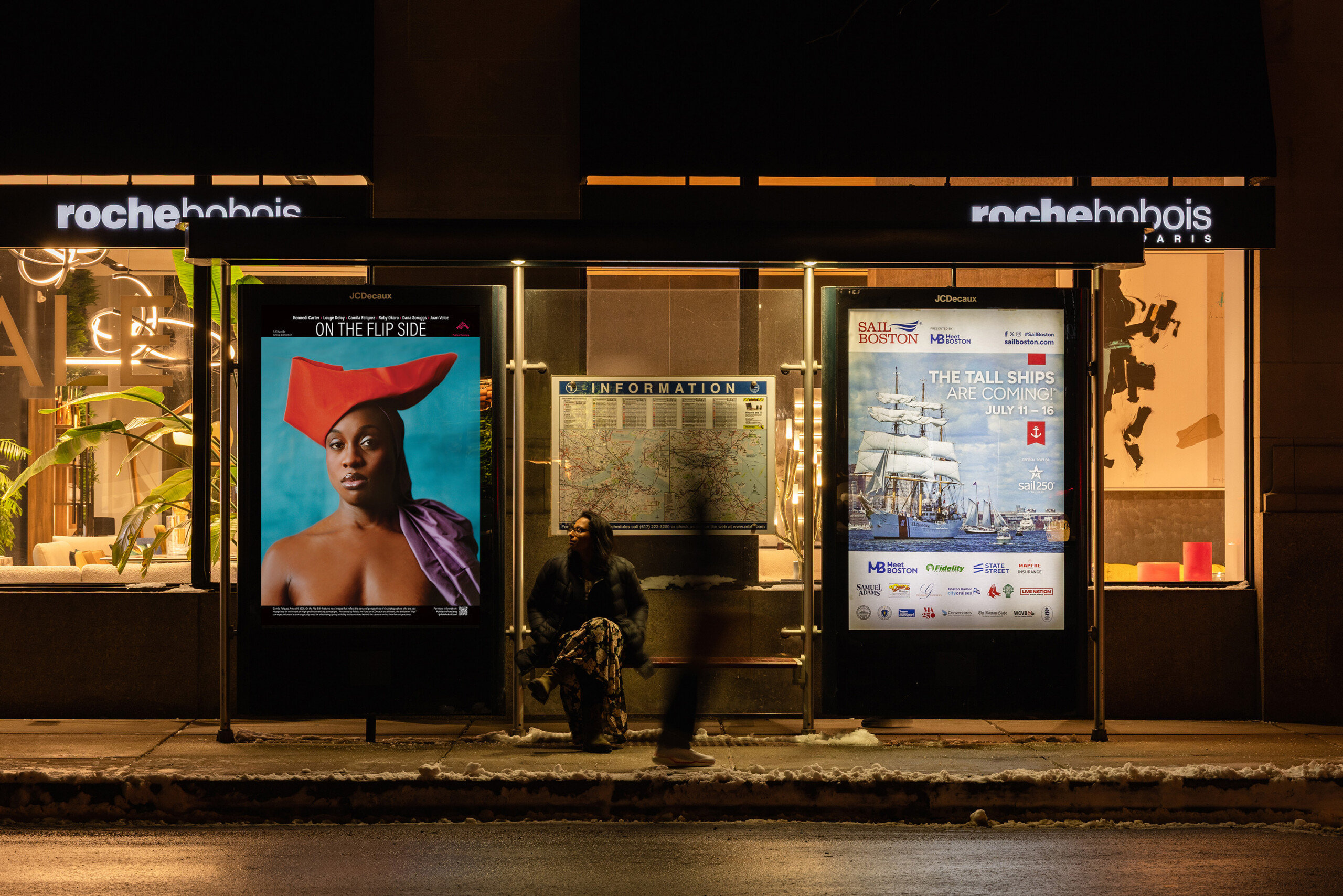
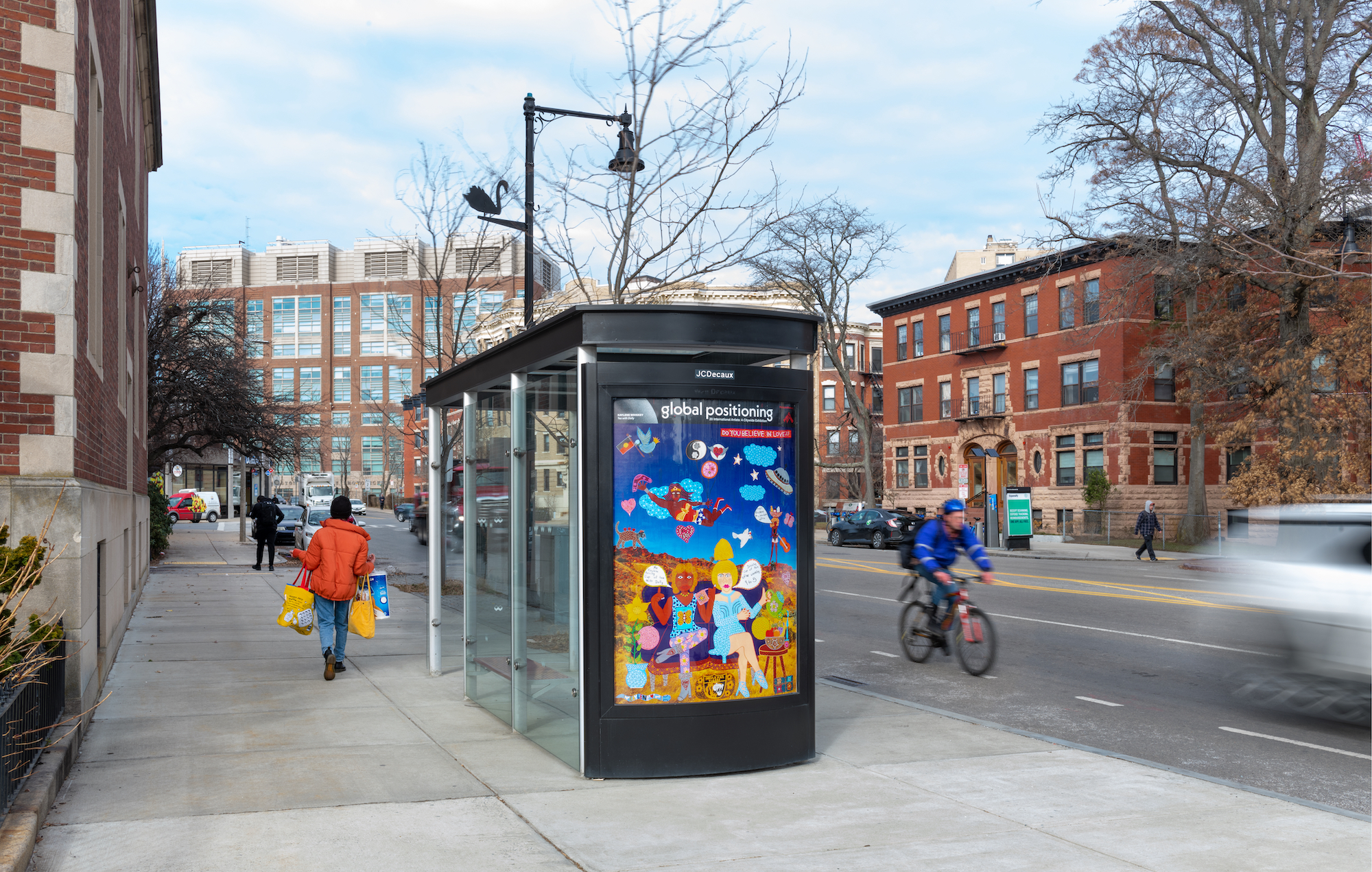
Travels Pretty is an exhibition of 12 new artworks by Wendy Red Star (b. 1981, Billings, MT) presented on 300 JCDecaux bus shelters in New York City, Chicago, and Boston. Raised on the Apsáalooke (Crow) reservation in Montana, Red Star reshapes dominant narratives by casting light on the complex histories of Native Americans through a feminist Indigenous lens.
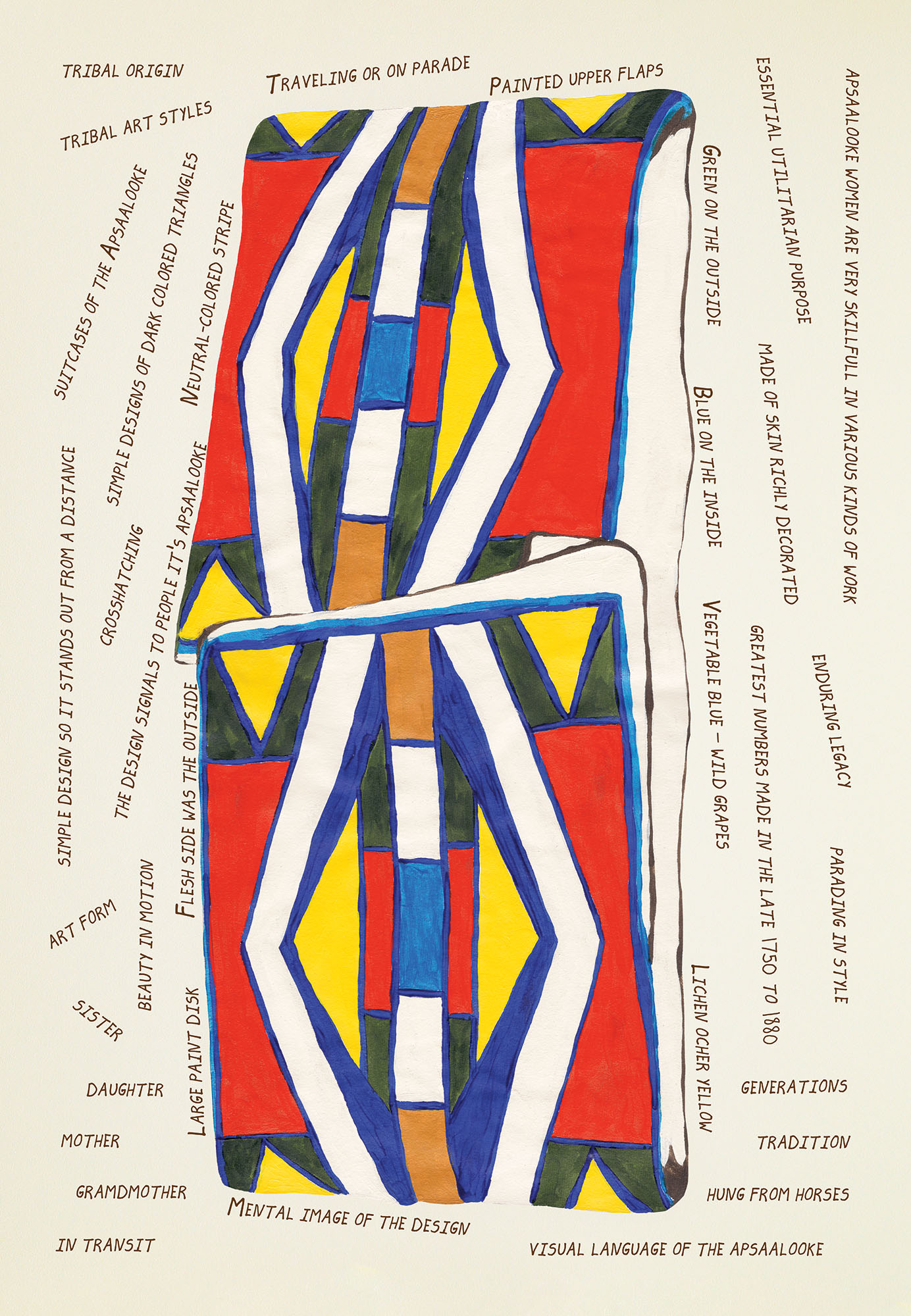
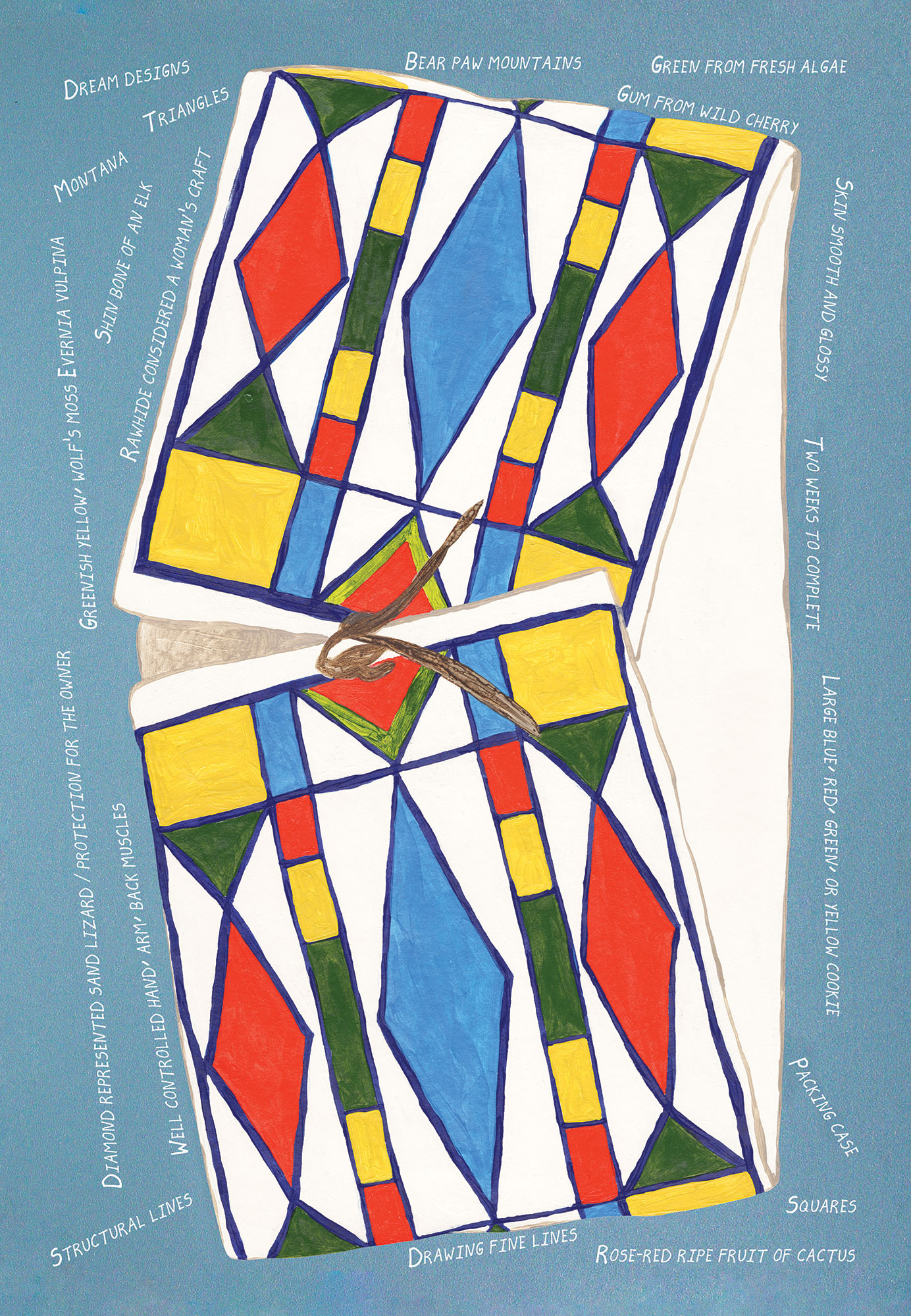
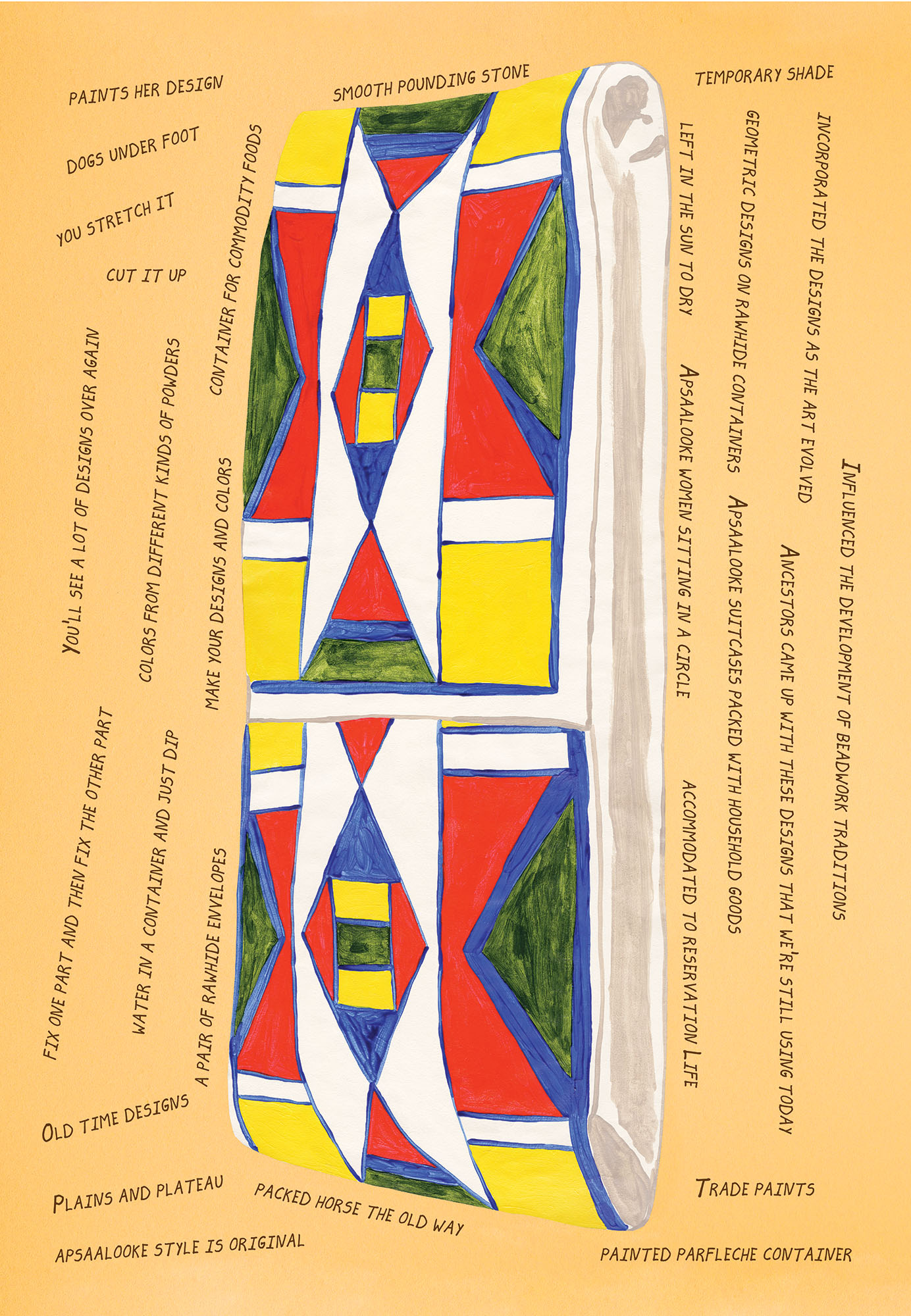
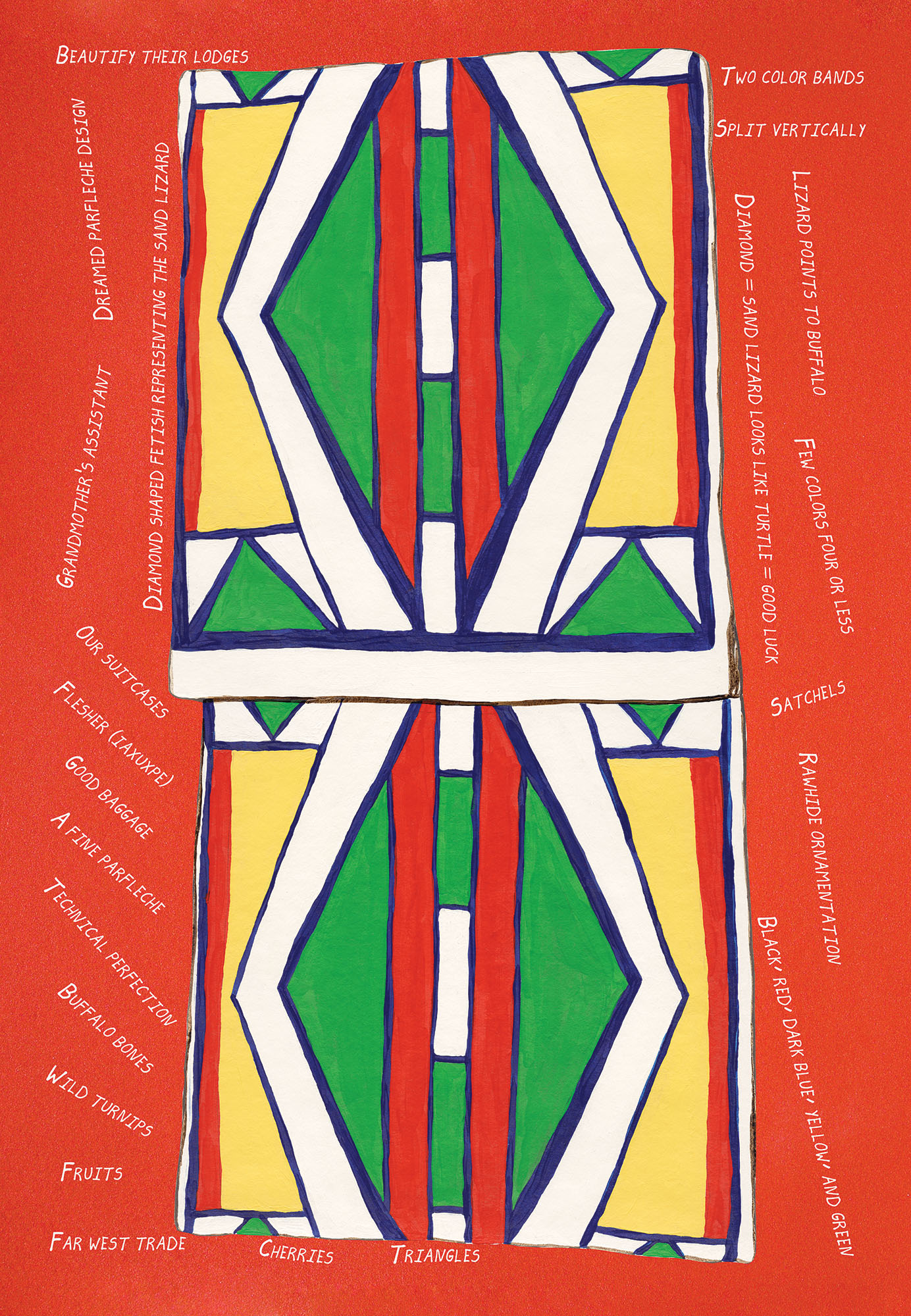
For Red Star’s first public art exhibition, she explores parfleches, vibrantly painted rawhide bags made by certain nomadic tribes of the North American Great Plains. Parfleches constitute one of the great traditions of imagery created by Native artists. Painted with intricate geometric designs, these carrying cases were used by the Apsáalooke and other tribes to store and transport food and personal possessions. These “suitcases” were traditionally made by women and served as a compelling and creative means of self-expression. Visually weaving together stories across generations, Red Star created this dynamic body of work with bus shelters in mind. Standing as a metaphor for mobility and travel, Red Star draws an association between these suitcases used to transport goods and the buses used to transport people. The parfleches were typically strapped on horses and dogs to travel all over the United States.
Through this series of vibrantly colored acrylic paintings, Red Star masterfully reinterprets parfleche designs by looking through the collections of major museums that house Apsáalooke cultural material. Mining the archives of the American Museum of Natural History, New York City; Brooklyn Museum, New York City; National Museum of the American Indian, New York City; the Field Museum, Chicago; and the Peabody Museum of Archeology and Ethnology at Harvard University, Cambridge, MA, she meticulously researched the lore and making of parfleches. Each work includes handwritten texts with phrases referencing different aspects such as their history (“visual language of the Apsáalooke,” “handed down from one generation to the next,” “greatest numbers made in the late 1750s to 1880s,” “found in nearly all museum collections that have Apsáalooke cultural material”); how they were used (“meat bag,” “hung from horse,” “far west trade”); descriptions of the designs (“diamond represented sand lizard / protection for the owner,” “large hourglass,” “candy cane stripe”); how they were made (“mother taught her daughter,” “rawhide considered women’s craft,” “two weeks to complete”), and what the pigments are made from (“fish roe,” “pounded fine berries,” “green from fresh algae”). To celebrate the thousands of women who painstakingly created the parfleches but are not credited with the craftsmanship, Red Star titled each of the 12 paintings after women from the Apsáalooke tribe, whose names she found in the 1885 Crow Census.
By taking the parfleches outside the museum walls, where many are currently housed, and reimagining them for city streets in larger-than-life compositions, Red Star celebrates their histories and makers. For Red Star, these works are markers of the Apsáalooke people and represent the resilience of her community.
Wendy Red Star: Travels Pretty is curated by Public Art Fund Associate Curator Katerina Stathopoulou.