Peter D'Agostino Messages to the Public
About the Exhibition
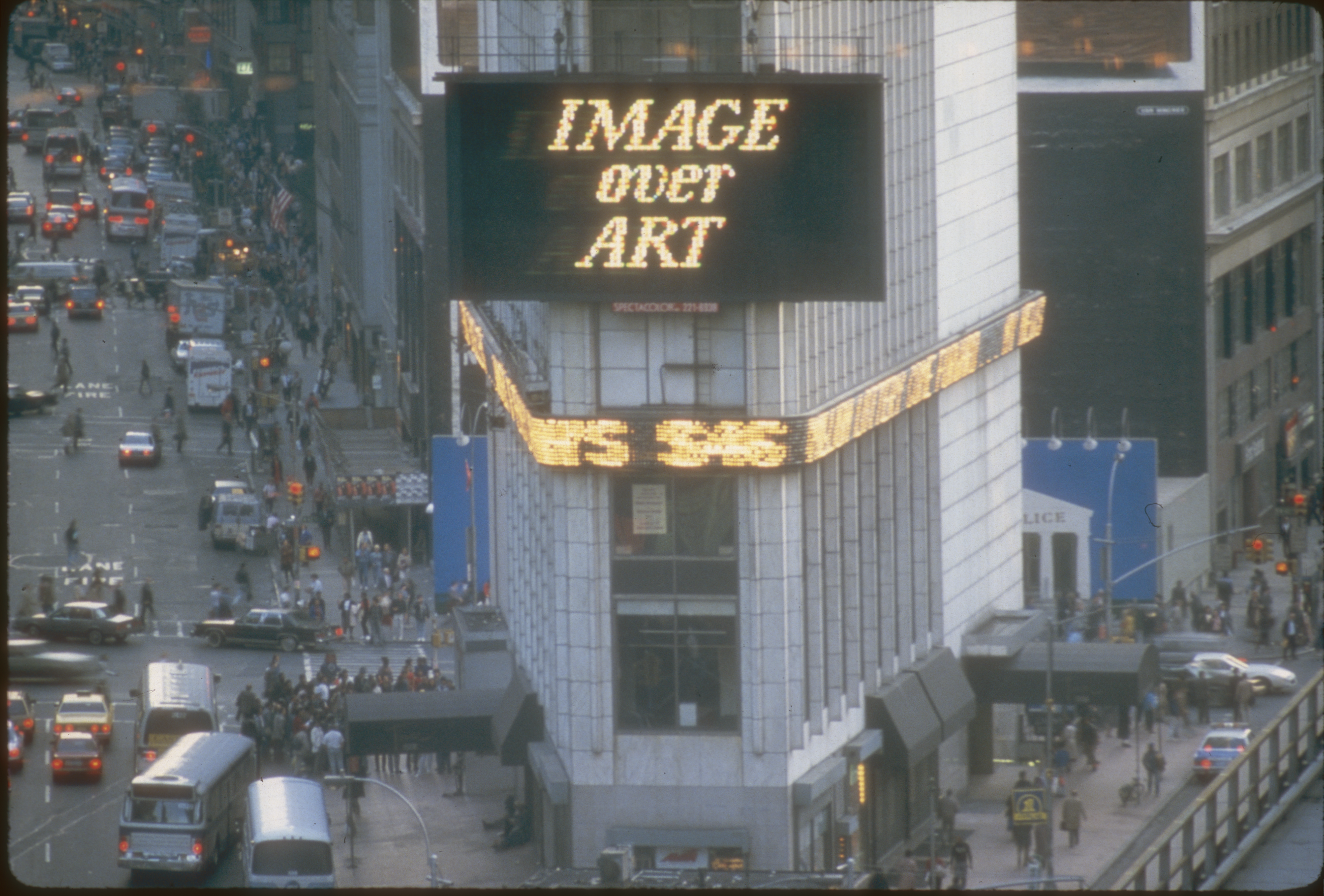
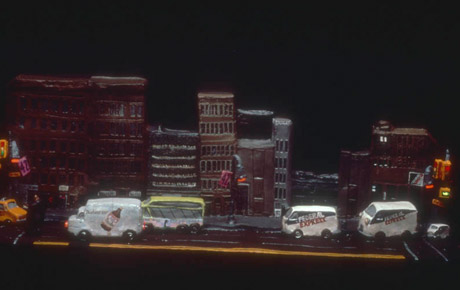
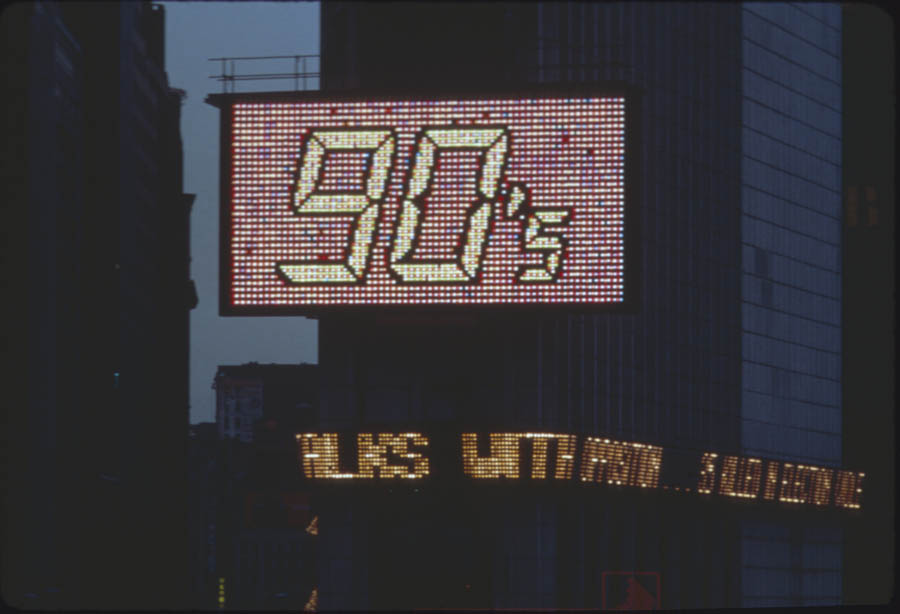
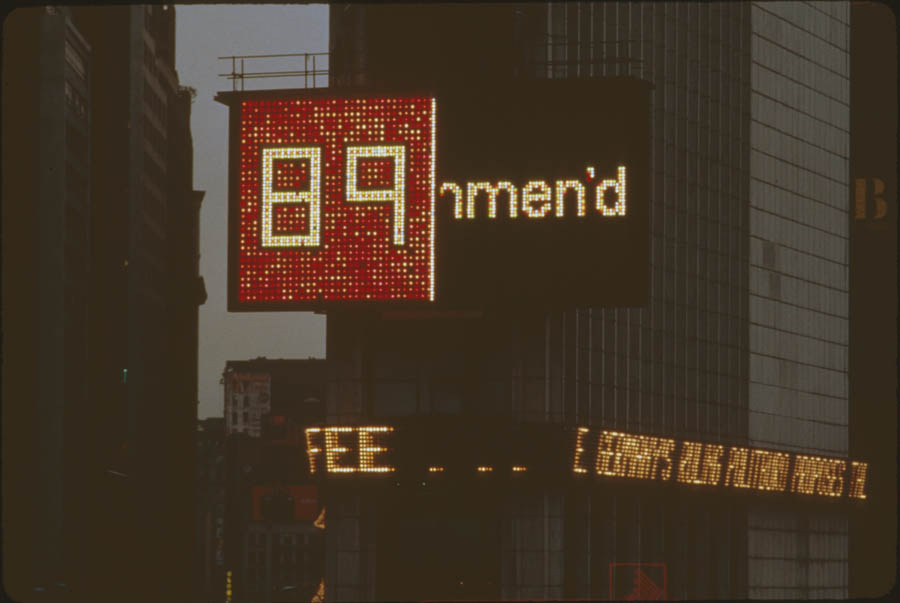
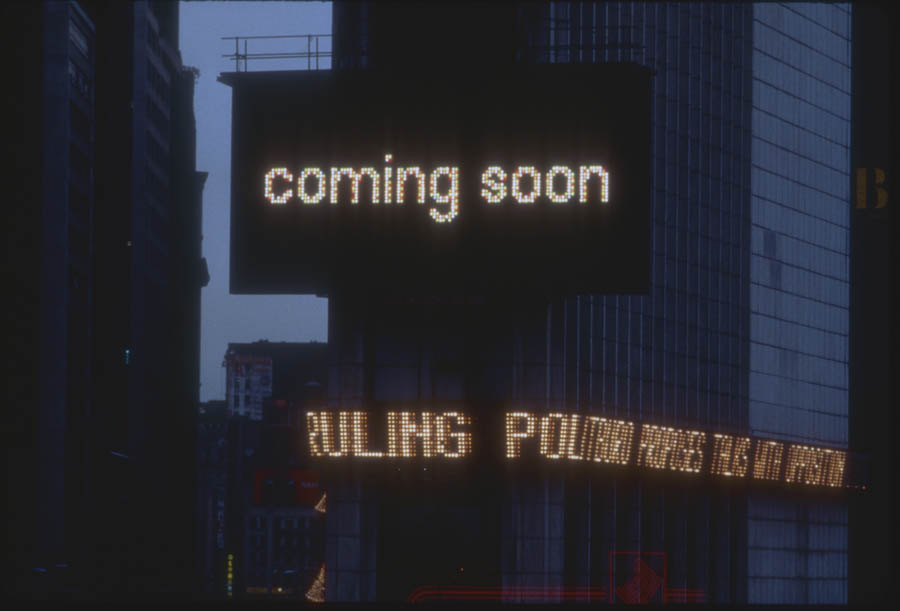
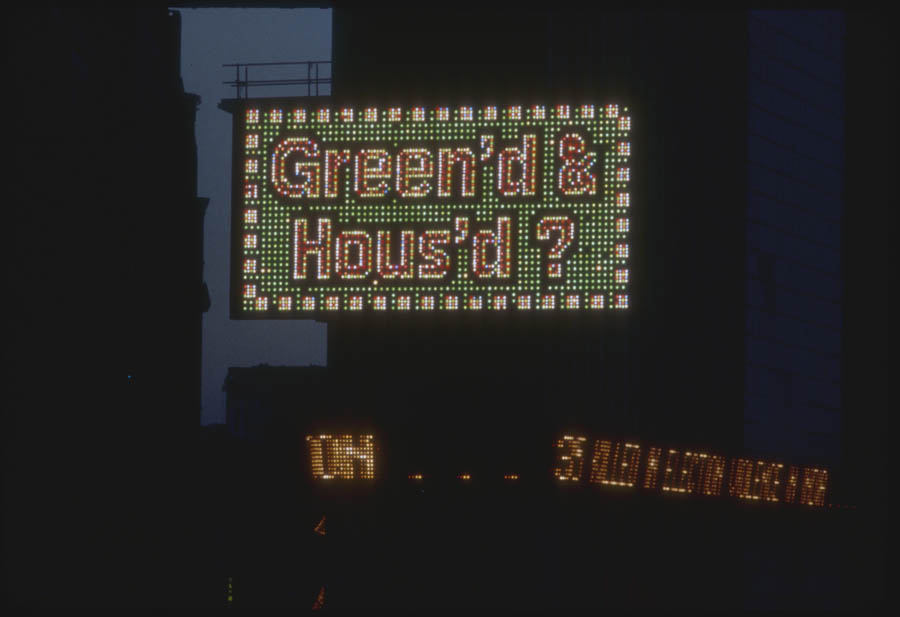
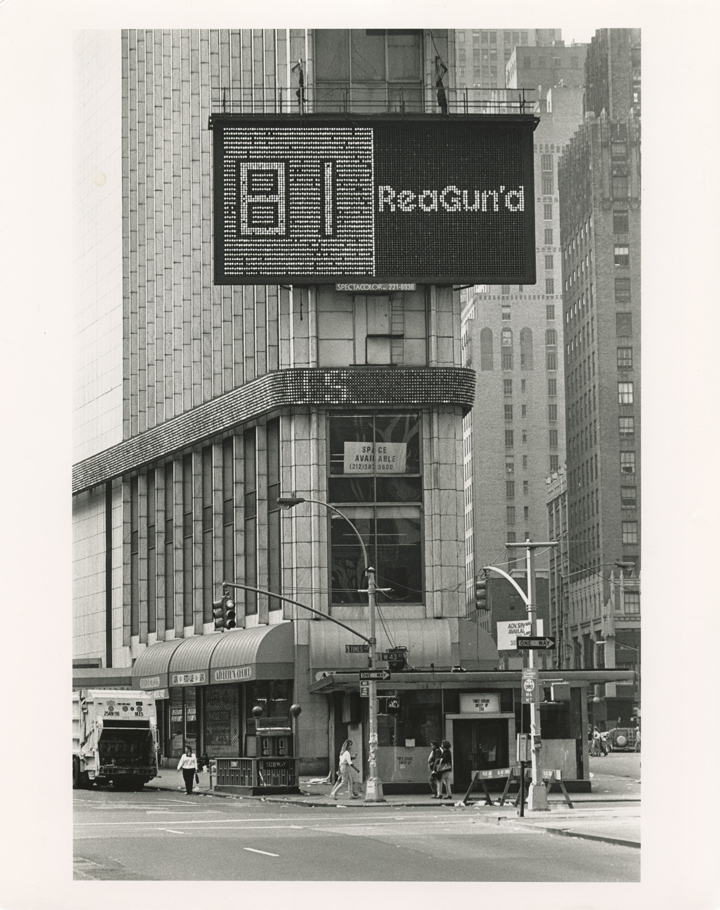
A DecAID’s ReView is a countdown to the 1990s—Times Square style. This fast-moving “spot” presents an abbreviated version of the decade’s most “significant” events. Peter D’Agostino (b. 1945, New York City, NY) examines what has been called the ReDecade (so named because the 1980s have virtually replayed and simulated many of the preceding trend, fashions, and styles of decades past) and selectively creates neologisms such as “Iran’d,” “Rea gun’d,” and “Tiananmen’d” to recap the decade’s events.
D’Agostino’s absurd compression of a decade’s accumulation of history into 30 seconds parodies the promise of broadcast news media to deliver the world to our doorsteps in just 30 minutes. However, as the title clearly indicates, A DecAID’s ReView is not without serious commentary of the last ten years, and concludes by posing the question “Green’d & Hous’d?” While this appears to project hope for the 1990s after an especially bleak decade, this utopian posturing quickly fades as it takes on the double-edged meaning of the “Greenhouse Effect.”
Photo Gallery
About the Series
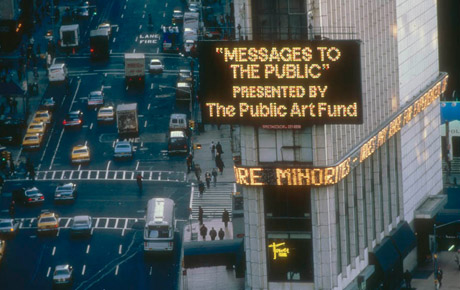
Messages to the Public formed a key part of the Public Art Fund’s long-term commitment to media-based artworks. Running from 1982 to 1990, the show featured a series of artists’ projects created specifically for the Spectacolor board at Times Square.
As Russell Miller from Ohio newspaper The Toledo Blade explained in his article on February 19, 1984, “every month, a different artist presents a 30-second animation on the Spectacolor light board—an 800-square-foot array of 8,000 red, white, blue, and green 60-watt bulbs that dominates the Times Square vista. The spot is repeated more than 50 times a day for two weeks, wedged into a 20-minute loop of computer-animated commercials.
“Jane Dickson, a painter, was working for Spectacolor, Inc. as an ad designer and computer programmer when, three and a half years ago, she first thought to use the light board to display noncommercial art.
“‘I picked that title,’ she said of Messages to the Public, ‘because I thought the propaganda potential from this project was terrific.’ The board, she noted, was regularly used for ‘commercial propaganda.’
“Dickson sought help from the Public Art Fund, an organization based here and dedicated to taking art out of the galleries and placing it in the city’s streets and parks.”
Project Director of the Public Art Fund Jessica Cusick explained, “We’re trying to do art that’s timely, has a message, is visually potent and is trying to deal with the fine line dividing fine art and commercial art.”
Related Exhibitions