Forrest Myers The Wall
About the Exhibition
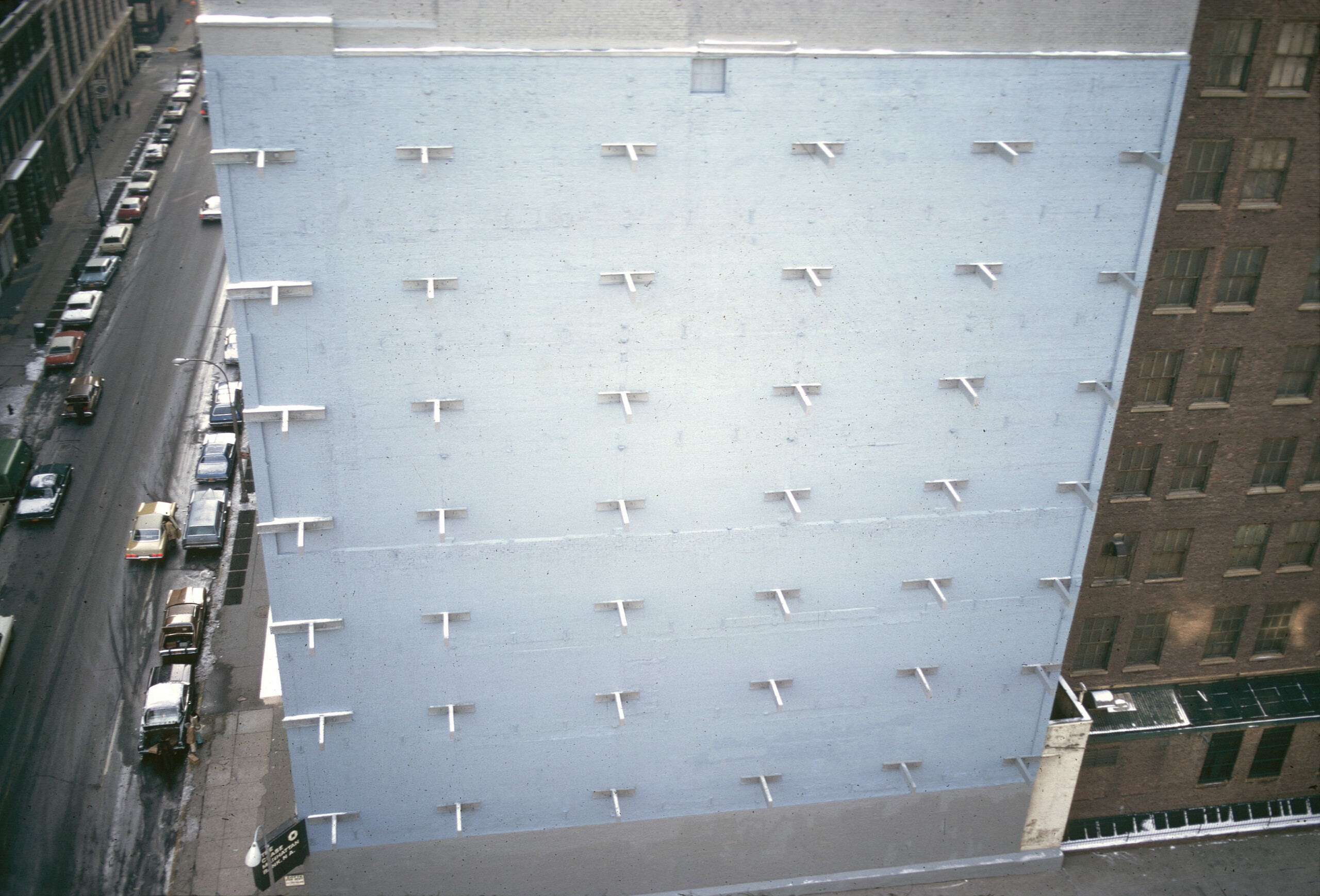
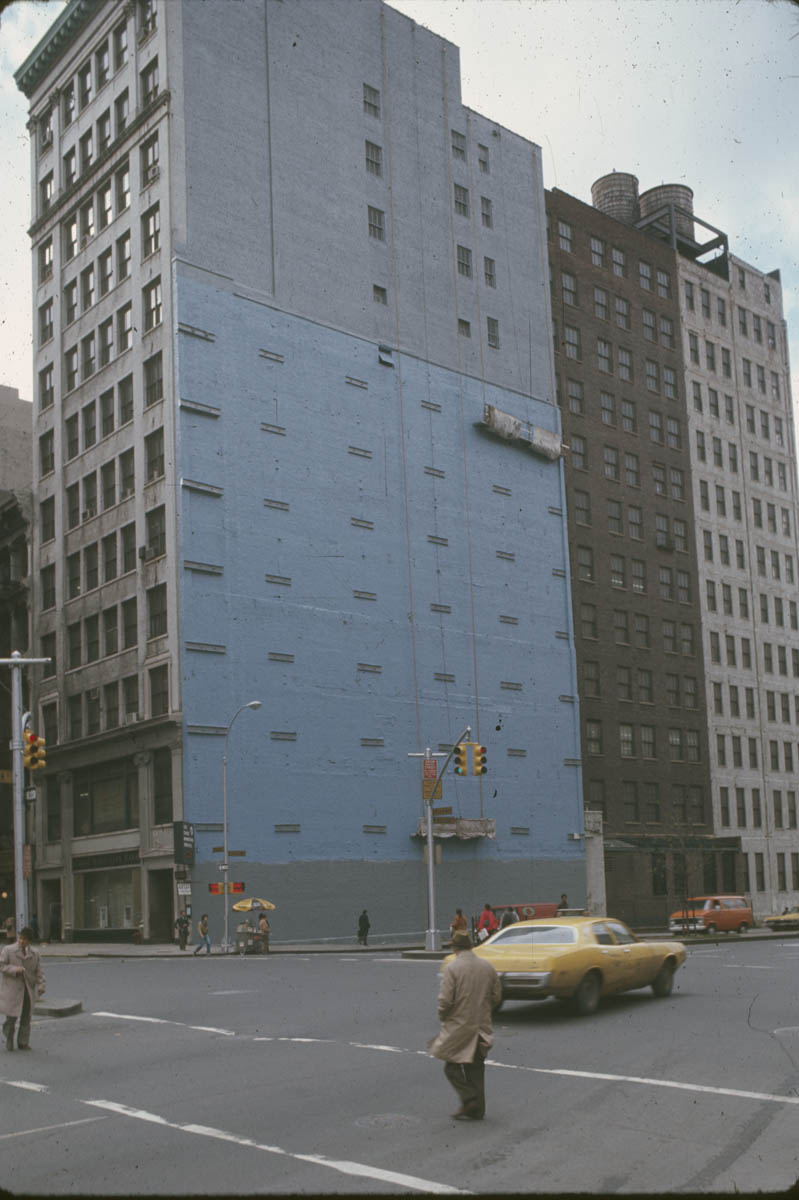
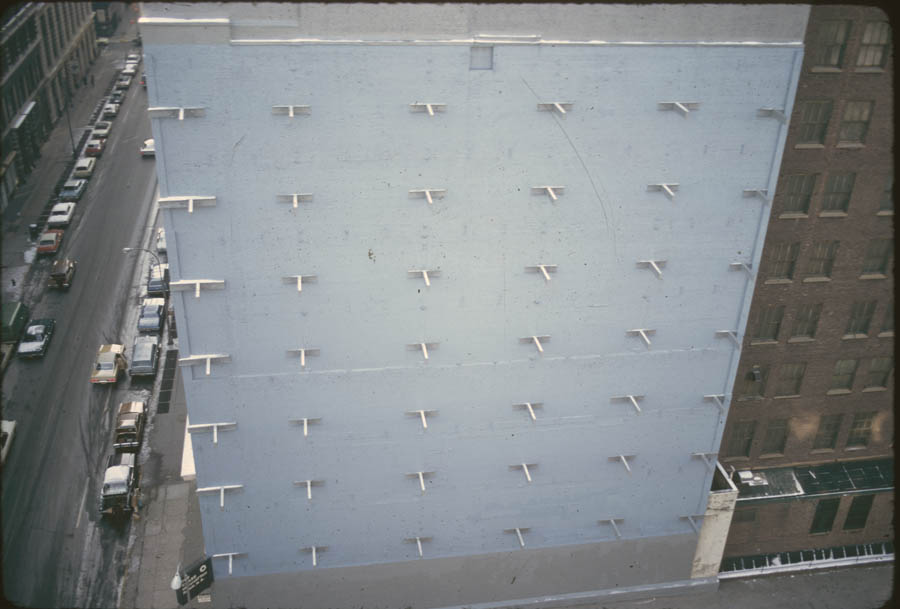
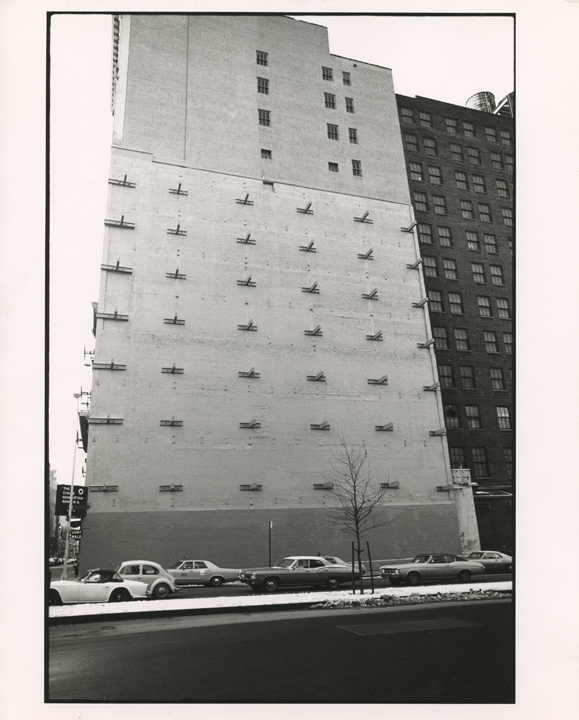
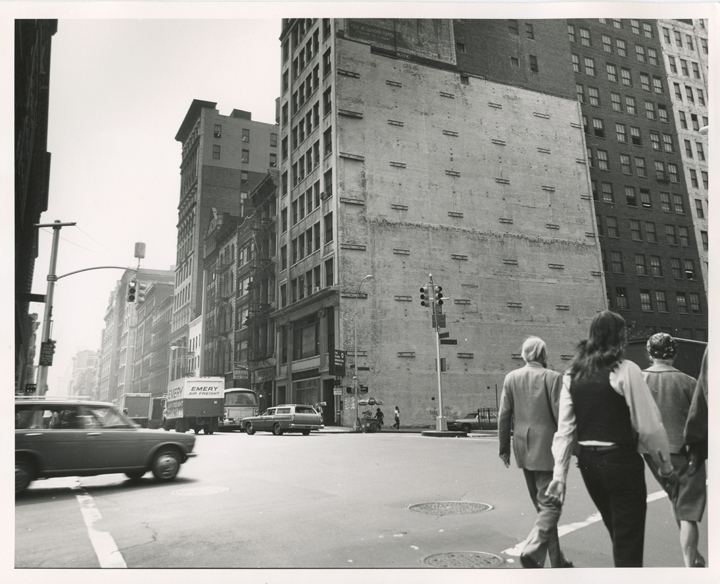
In 1930, Robert Moses, New York City’s urban planner, made the decision to double the width of Houston Street both to expand the subway system and permit additional car traffic. An entire city block was demolished at the northwest corner of Houston and Broadway, revealing the architectural joists that had supported an adjoining building. In 1973, sculptor Forrest Myers (b. 1941, Long Beach, CA) used this wall as his canvas for The Wall, installing 42 green girders on the eight-story wall painted blue.
According to the artist, “when the artwork was created in SoHo [in 1973], it was a derelict, light manufacturing area where manufacturing had left and artists were able to move into these factories at low rents. This enabled the establishment of the largest artist district that New York City had ever experienced. A renaissance was taking place. The Wall became a symbol for the neighborhood—’the Gateway to SoHo,’ announcing that you were entering into an artist neighborhood.”
The Minimalist work, New York City’s largest public sculpture, was removed in 2002 for building repairs and was eventually raised and reinstalled in 2007, creating room for a row of billboards at street level.
Photo Gallery

Related Exhibitions

Originally presented at West Broadway & Grand Street