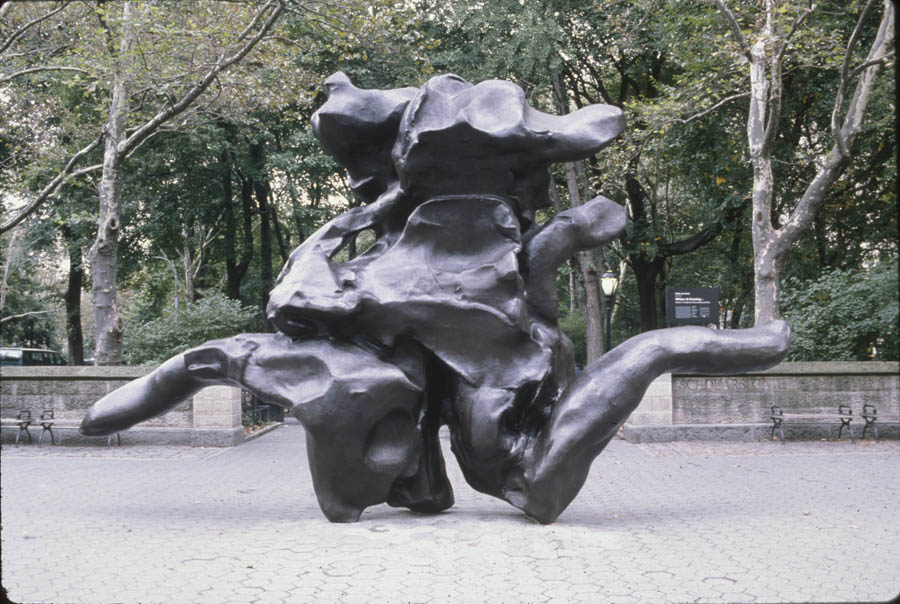
Willem de Kooning Standing Figure
About the Exhibition
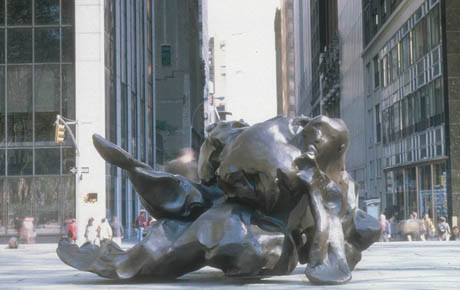
Willem de Kooning (1904–1997, b. Rotterdam, Netherlands) is one of the most important artists of the 20th century. Known primarily as a painter, de Kooning was a major figure in the Abstract Expressionist movement that was fundamental to the ascendancy of American art during the postwar period. While de Kooning had been encouraged to explore the possibilities of sculpture by Henry Moore, it was not until the summer of 1969 when traveling in Italy that de Kooning created his first work in this medium. Arriving in Rome that July, the artist met sculptor Herzel Emanuel, an old friend who had recently acquired a foundry outside the city. De Kooning modeled a group of small works in clay, and Emanuel cast them in bronze. Among these clay figures were two untitled works that would later be enlarged to monumental scale. These sculptures, shown for the first time at public venues in New York City, are exhibited at Bryant Park (Reclining Figure, 1969–82) and Doris C. Freedman Plaza (Standing Figure, 1969–84).
Photo Gallery

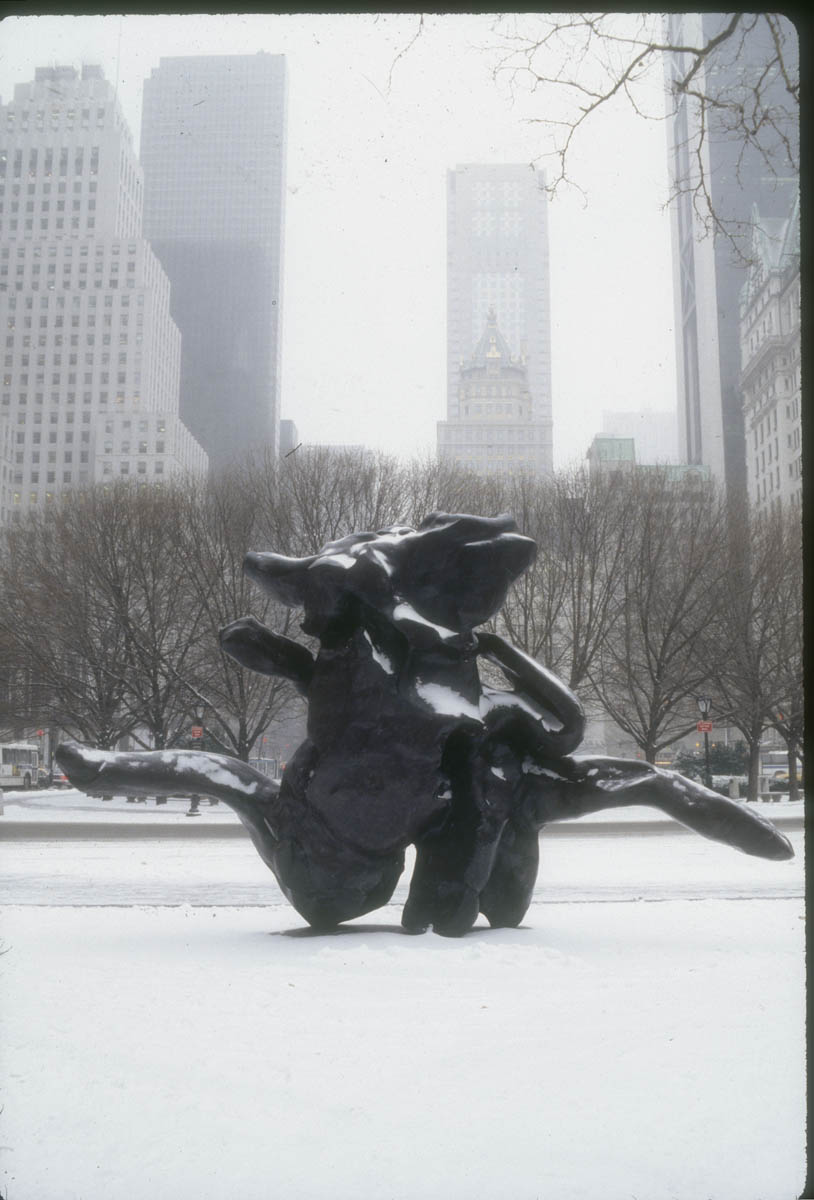
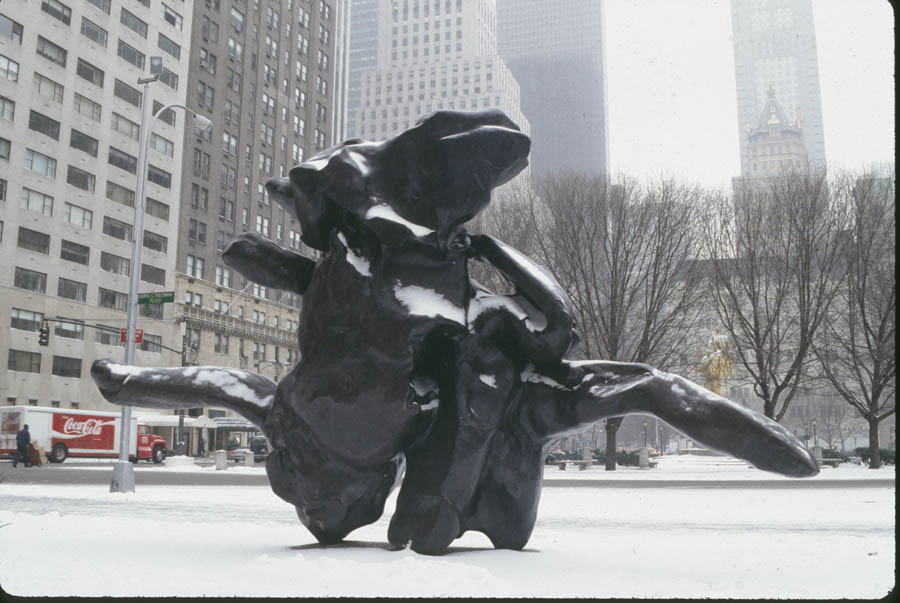
Supported by the Public Art Fund, Inc., a non-profit organization supported in part with public funds from the National Endowment for the Arts, the New York State Council on the Arts, a State Agency, and the New York City Department of Cultural Affairs, and through generous gifts from corporations, foundations, and individuals. This exhibition is made possible through the cooperation and support of the city of New York/Parks & Recreation and The Bryant Park Restoration Corporation.
Standing Figure and Reclining Figure are from the Collection of the Willem de Kooning Revocable Trust, Mitchell-Innes & Nash Gallery, and Matthew Marks Gallery.
Related Exhibitions


Central Park
At 60th Street and 5th Avenue