Jenny Holzer Messages to the Public: Untitled
About the Exhibition
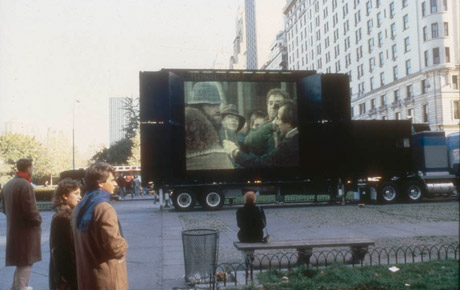
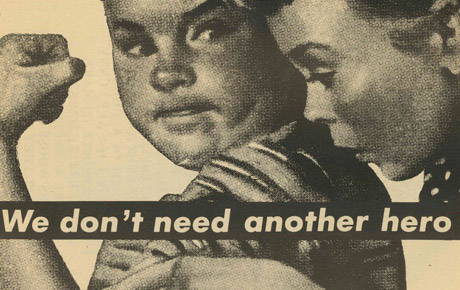
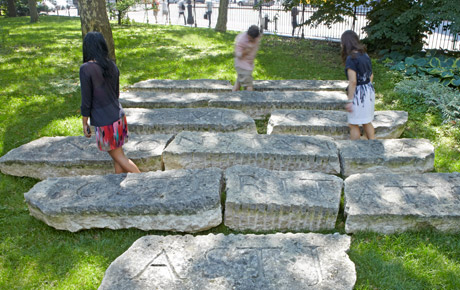
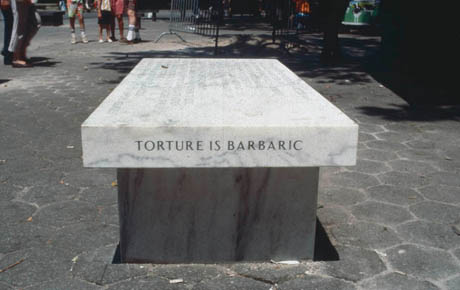
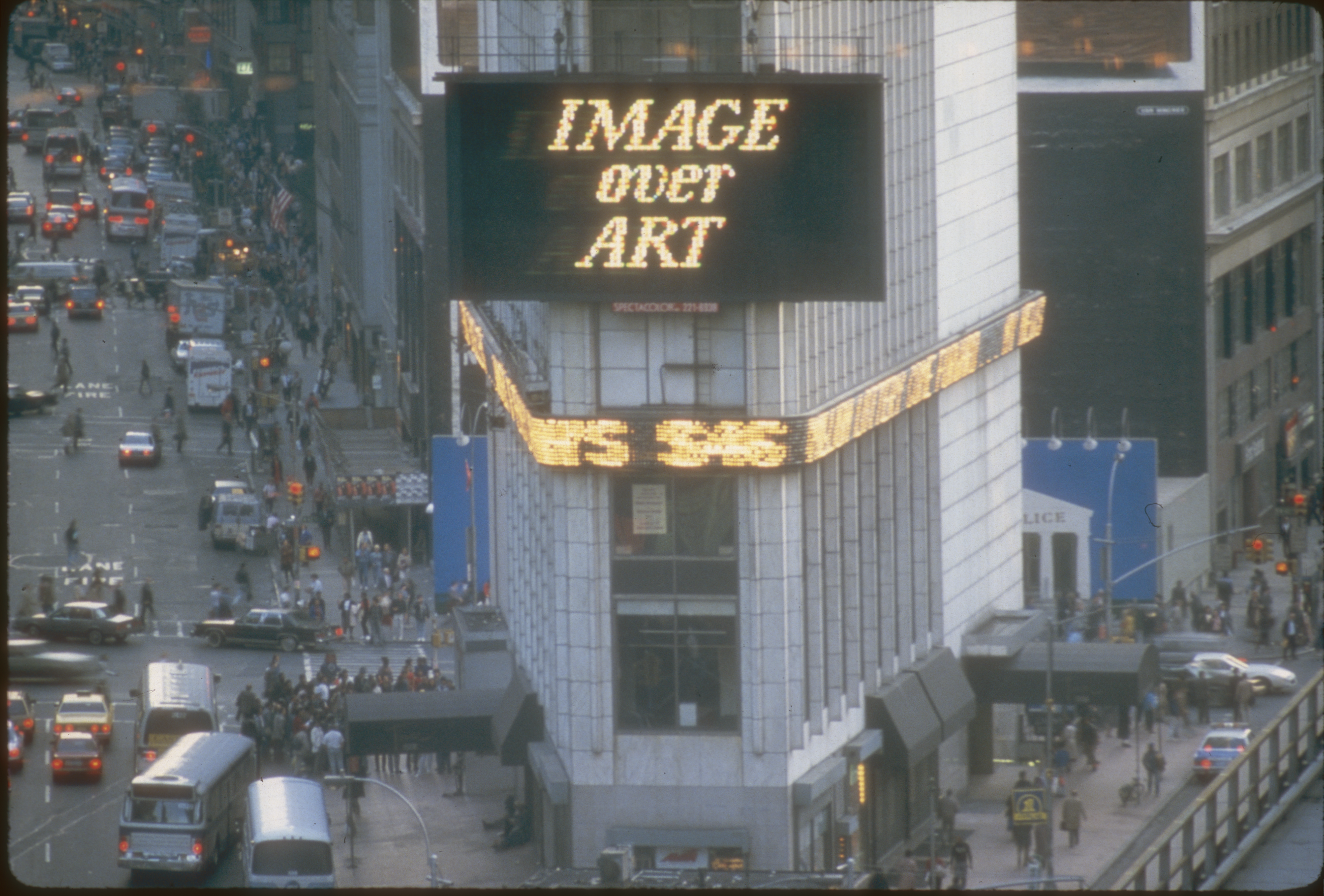
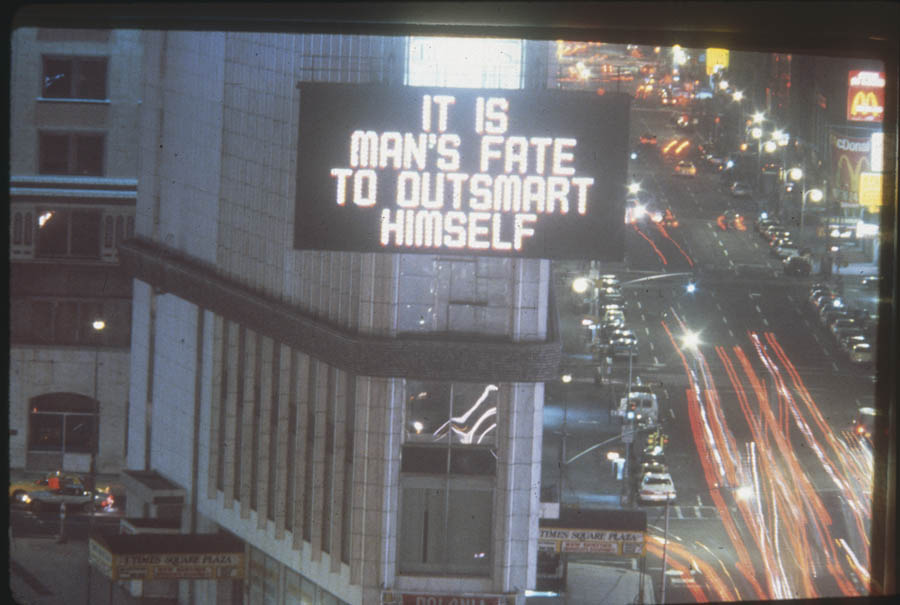
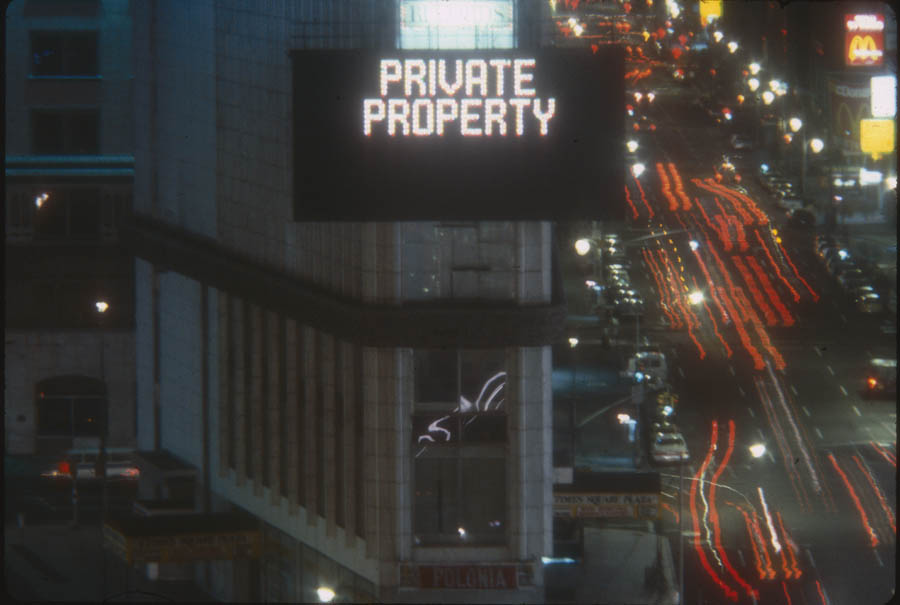
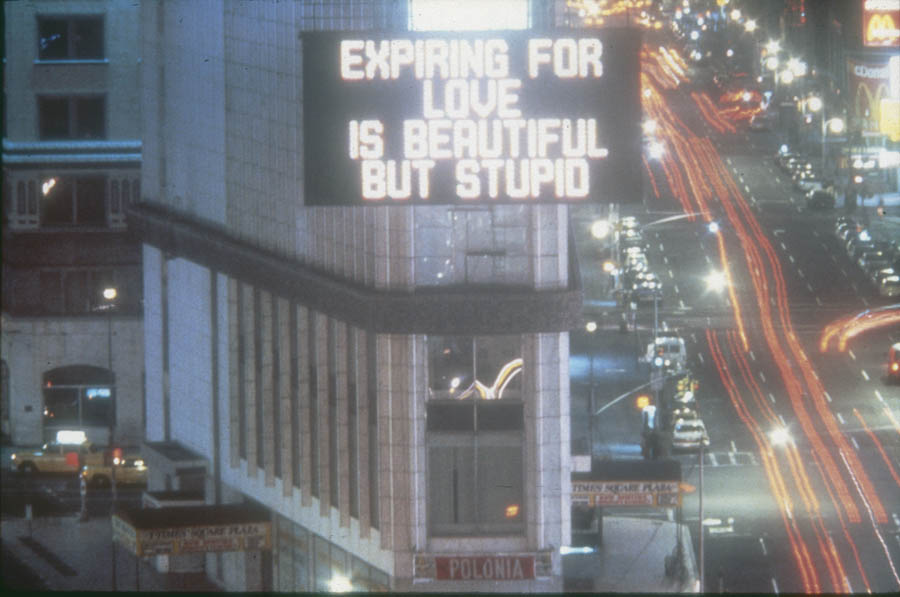
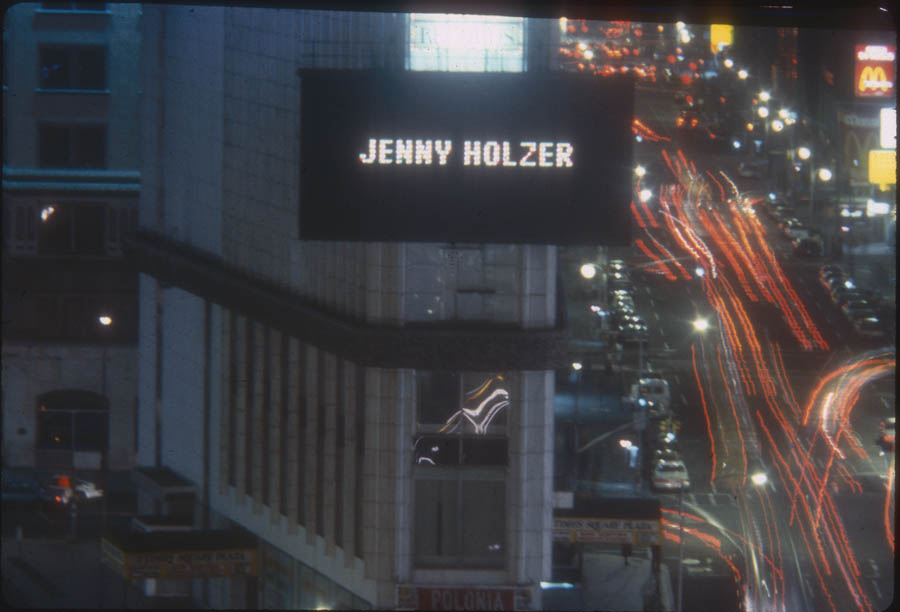
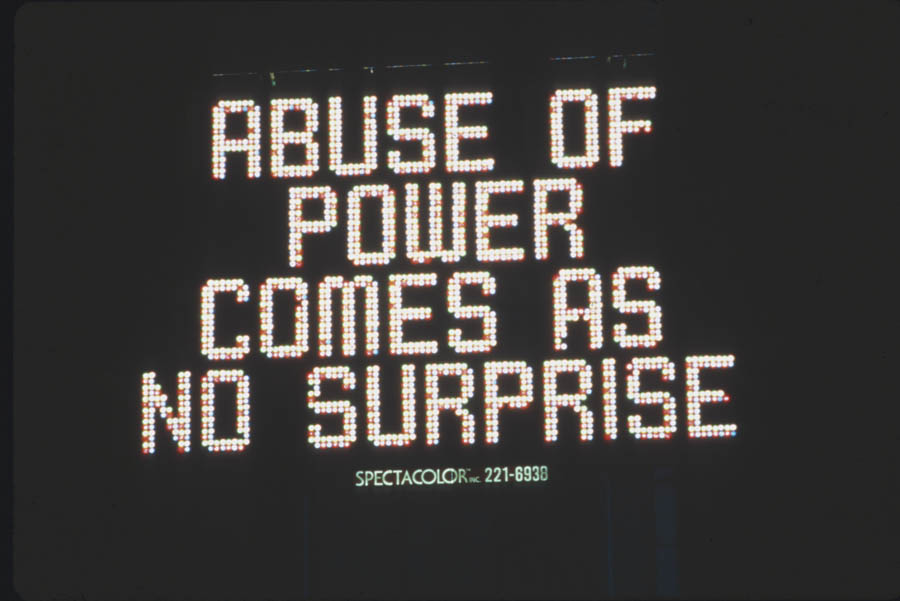
Jenny Holzer (b. 1950, Gallipolis, OH) is best known for Truisms, a series she created from 1977 to 1979. Extracted and refined from the texts Holzer was reading as part of the Whitney Independent Study Program, these unsigned, pithy one-liners were originally wheat-plastered over New York City’s buildings and walls. For her untitled Public Art Fund project, Holzer selected a few Truisms, including “Abuse of power comes as no surprise”; “Your oldest fears are your worst ones”; “Private property created crime”; “Torture is barbaric”; “Expiring for love is beautiful but stupid”; and “Fathers often use too much force.” Some of these phrases were also used etched into black granite and white marble for Benches, Holzer’s 1989 project with Public Art Fund.
Photo Gallery
About the Series
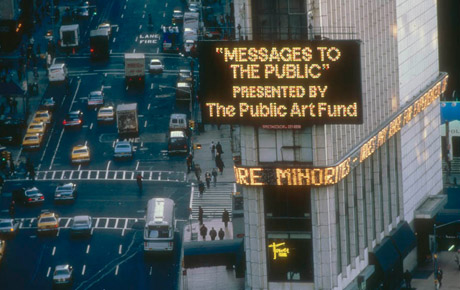
Messages to the Public formed a key part of the Public Art Fund’s long-term commitment to media-based artworks. Running from 1982 to 1990, the show featured a series of artists’ projects created specifically for the Spectacolor board at Times Square.
As Russell Miller from Ohio newspaper The Toledo Blade explained in his article on February 19, 1984, “every month, a different artist presents a 30-second animation on the Spectacolor light board—an 800-square-foot array of 8,000 red, white, blue, and green 60-watt bulbs that dominates the Times Square vista. The spot is repeated more than 50 times a day for two weeks, wedged into a 20-minute loop of computer-animated commercials.
“Jane Dickson, a painter, was working for Spectacolor, Inc. as an ad designer and computer programmer when, three and a half years ago, she first thought to use the light board to display noncommercial art.
“‘I picked that title,’ she said of Messages to the Public, ‘because I thought the propaganda potential from this project was terrific.’ The board, she noted, was regularly used for ‘commercial propaganda.’
“Dickson sought help from the Public Art Fund, an organization based here and dedicated to taking art out of the galleries and placing it in the city’s streets and parks.”
Project Director of the Public Art Fund Jessica Cusick explained, “We’re trying to do art that’s timely, has a message, is visually potent and is trying to deal with the fine line dividing fine art and commercial art.”
Related Exhibitions