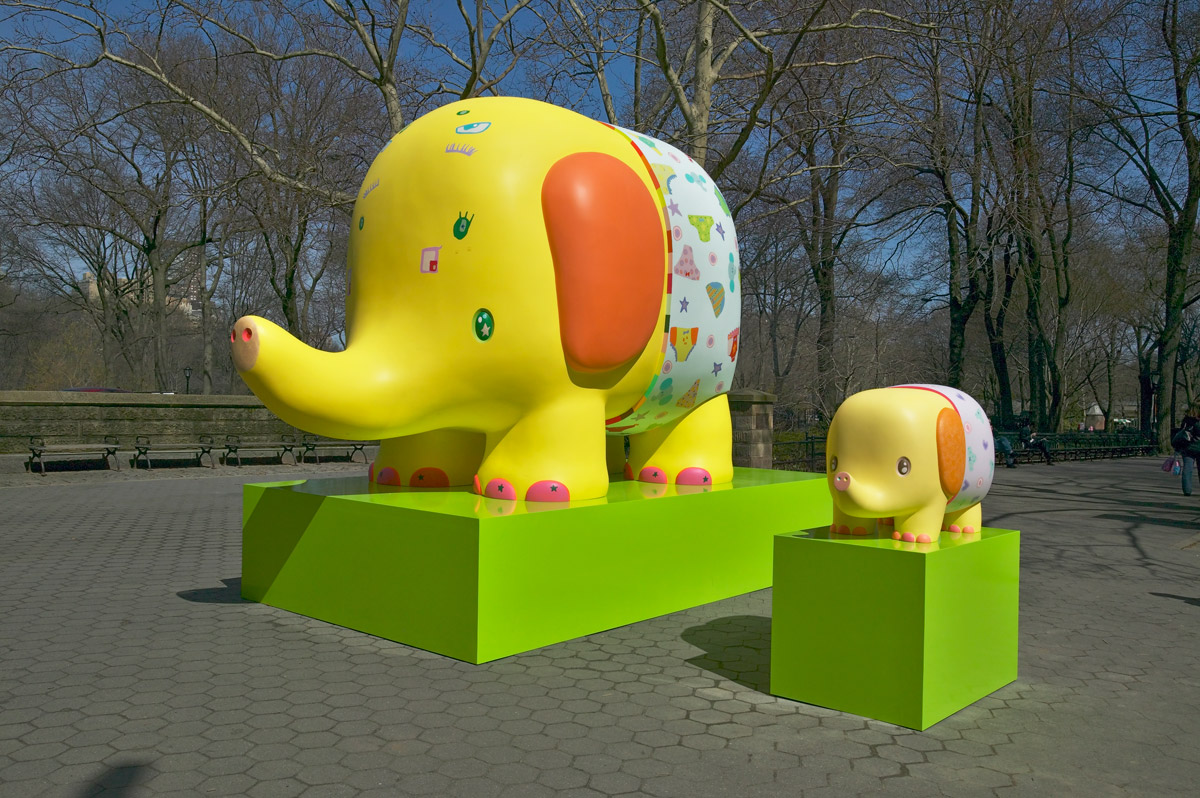
Chinatsu Ban Little Boy - V W X Yellow Elephant Underwear / HIJ Kiddy Elephant Underwear
About the Exhibition
Public Art Fund presents a series of four public art projects as part of Little Boy, a major exhibition hosted by Japan Society Gallery. The exhibition and public installations, all curated by Takashi Murakami (b. 1963, Tokyo, Japan) explore the astoundingly popular phenomenon called otaku, a Japanese youth subculture obsessed with fantastic and apocalyptic science fiction, fantasy, video games, comic books (manga), and film animation (anime), whose visual and musical forms are rapidly becoming globalized.
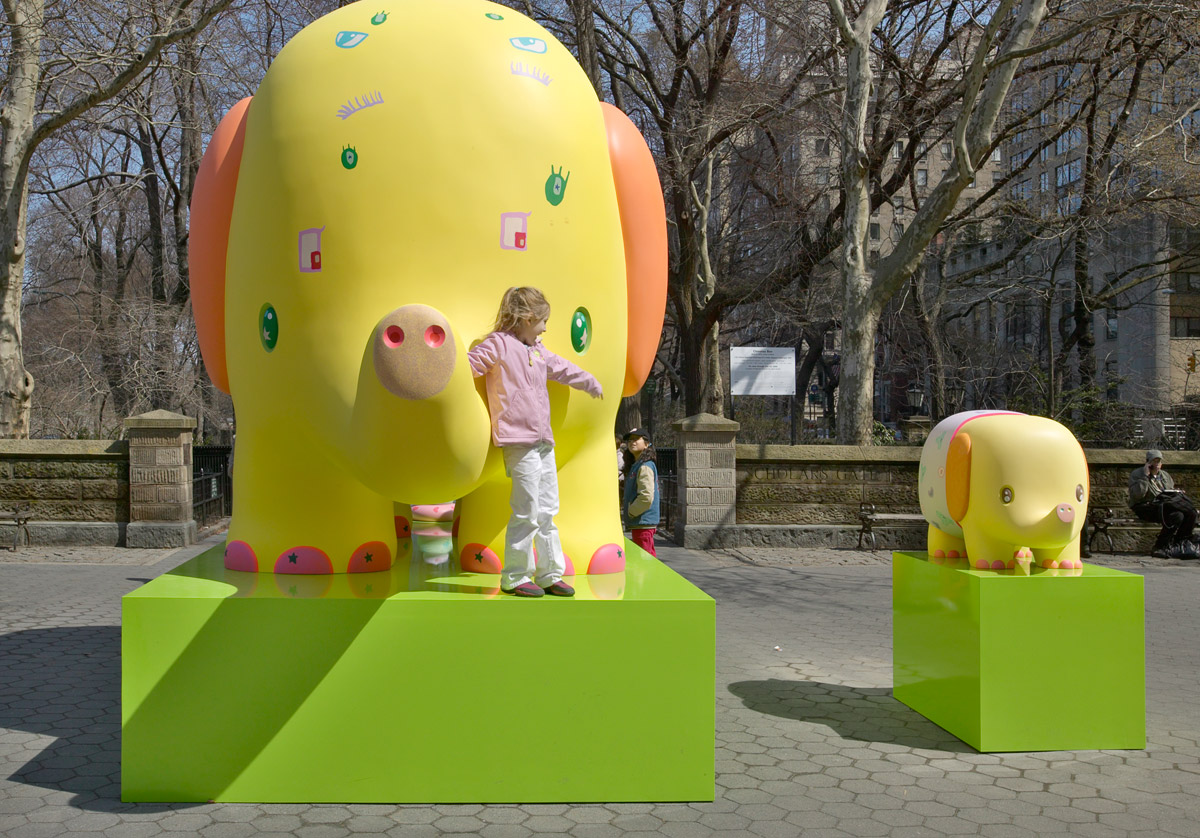
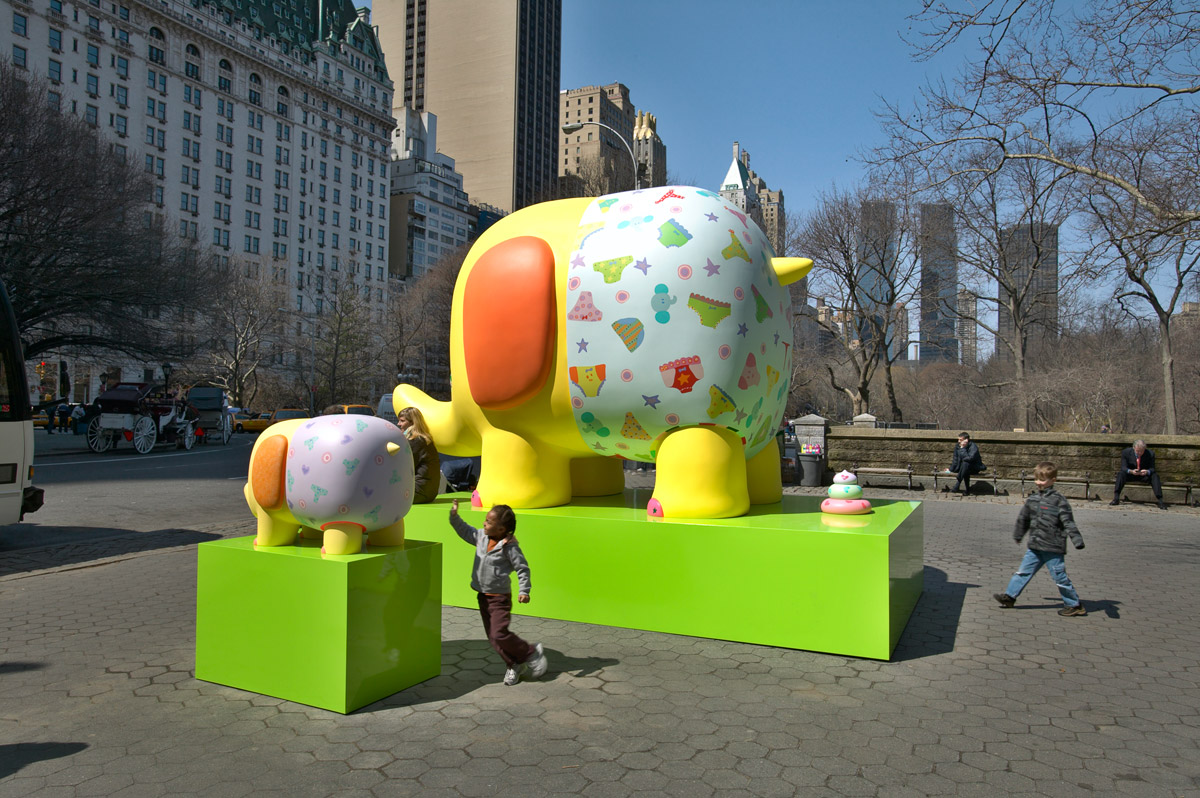
Since she first began making art in 1997, Chinatsu Ban (b.1 973, Aichi Prefecture, Japan) has developed a singular aesthetic style, creating acrylic paintings and sketches of elephants and human figures that float on a blank rice-paper background or in front of candy-colored stripes. V W X Yellow Elephant Underwear/H I J Kiddy Elephant, Ban’s first foray into sculpture, formally resembles her many colorful elephant drawings. With wide eyes, large bodies with small appendages, and no mouth, Ban’s two elephants are irresistibly cartoon-cute. But for the artist, they are also charged with intense meaning and personal symbolism. Like Louise Bourgeois, in whose work spiders frequently appear as a totem of maternal protection, Chinatsu Ban use of elephants has a talismanic relationship to her own childhood. This dates back to a small elephant figurine she once bought, which became a charm and a reassuring symbol of peace and safety.
Cuteness is an obsession for Ban, and her depictions are tinged with psychological edge. The Japanese word for “cute” is “kawaii.” More than just an adjective, the word has taken on tremendous cultural resonance in recent decades; the Japanese teen magazine CREA once noted that kawaii is “the most widely used, widely loved, habitual word in modern living Japanese.” From Hello Kitty, who first appeared on stationary products in the early 1970s, to more recent phenomena like pop duo Puffy AmiYumi, Japanese contemporary culture and the consumer goods market are saturated by all things kawaii. Anything can be made cute—even, in this case, a pile of elephant poop.
Photo Gallery
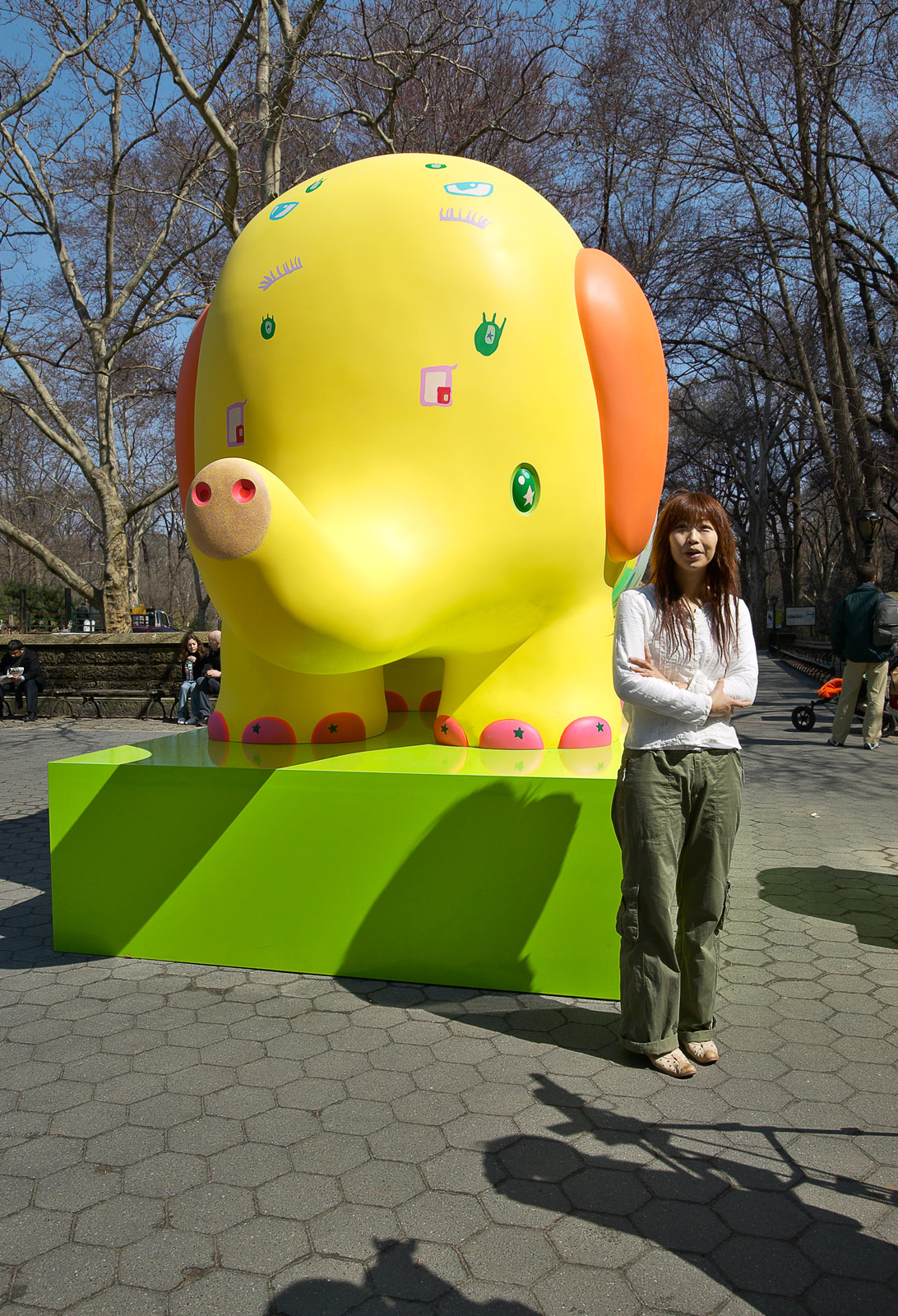
This presentation of Chinatsu Ban’s sculpture is made possible through the cooperation of the New York City Department of Parks & Recreation, The Honorable Michael R. Bloomberg, Mayor of the City of New York, and The Honorable Adrian Benepe, Commissioner, New York City Department of Parks & Recreation.
Little Boy: The Arts of Japan’s Exploding Subculture is sponsored by Microsoft.
Major support for this exhibition is provided by The W.L.S. Spencer Foundation and Kaikai Kiki Co., Ltd. and Kaikai Kiki New York, LLC.
Additional support is provided by the E. Rhodes & Leona B. Carpenter Foundation, The Rosenkranz Foundation, The Andy Warhol Foundation for the Visual Arts, the National Endowment for the Arts, Asian Cultural Council, The Blakemore Foundation, the Japan Foundation, and the Leadership Committee for Little Boy.
Artist support for this exhibition has been generously provided by Yoko Ono.
Transportation support is provided by Japan Airlines.
Related Exhibitions
Originally on view at Doris C. Freedman Plaza, Central Park
Central Park
At 60th Street and 5th Avenue