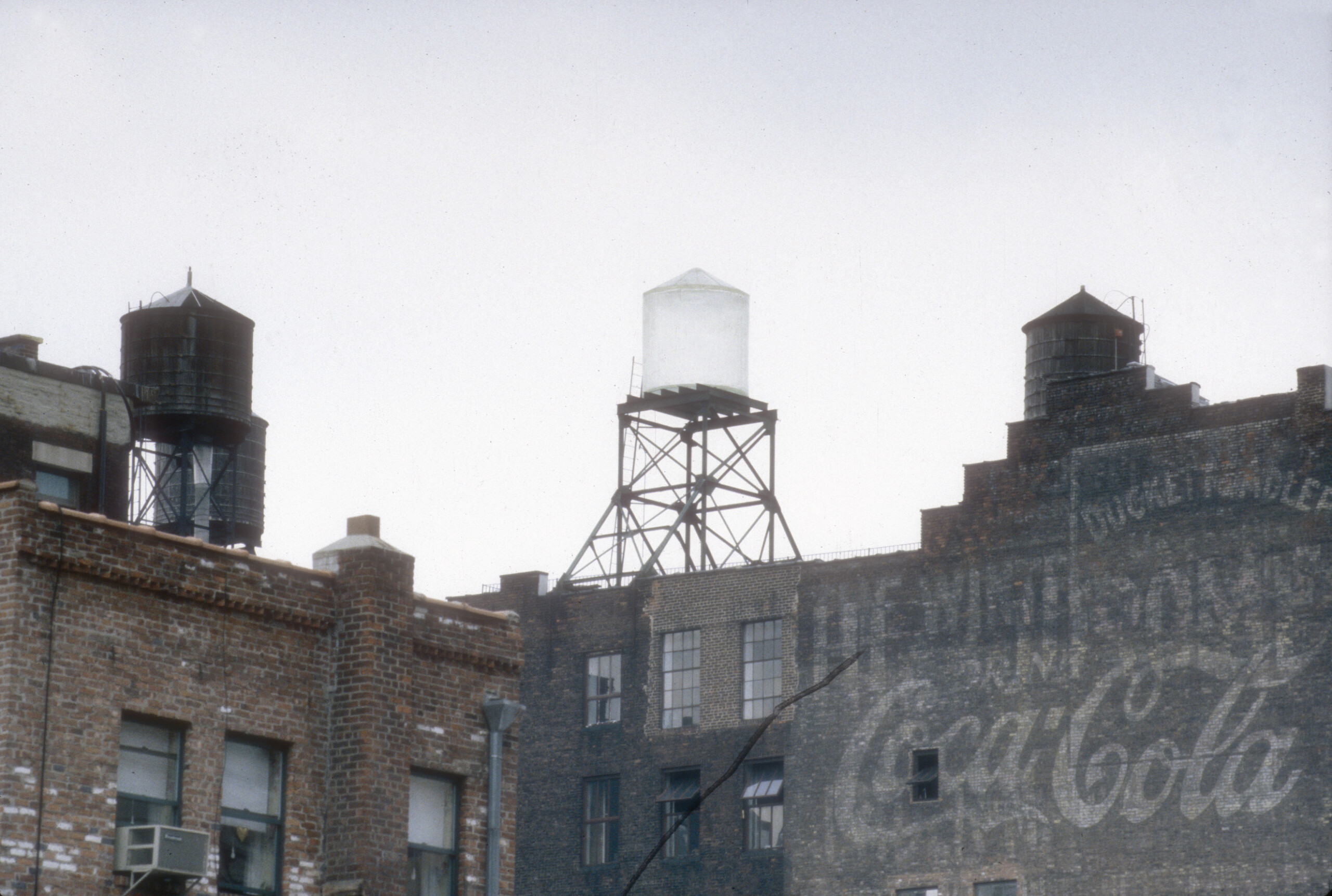
Rachel Whiteread (b. 1963, London, UK) is one of the most important British sculptors of the late 20th century because she transformed how viewers think about space, memory, and absence in sculpture. Unlike traditional sculpture, which focuses on form, her works make negative space—the empty or overlooked space around and within objects—into physical forms. Whiteread was the first woman to win the Turner Prize (1993), a landmark moment in British contemporary art, and she represented Great Britain at the 47th Venice Biennale (1997). She has used a variety of materials, including resin, plaster, concrete, and rubber, to fill the voids of objects or architectural spaces; the form that remains represents the space that was once empty.
Whiteread has presented solo exhibitions at Tate Britain, London (2017; travelled to 21er Haus-Museum of Contemporary Art, Vienna; National Gallery of Art, Washington, DC; Saint Louis Museum of Art); Hammer Museum, Los Angeles (2010); MFA Boston, MA (2008); Serpentine Gallery, London (2001). She was the first woman to present a solo exhibition at the British Pavillion at the 47th Venice Biennale, Italy (1997). House, London (1993), her first public commission, was followed by Water Tower, New York (1998), Holocaust Memorial in Vienna’s Judenplatz (2000); Untitled Monument in London’s Trafalgar Square (2001); and Cabin on New York City’s Governors Island (2016). Her work is in the collections of Fundación “la Caixa”, Sala de Exposiciones, Barcelona; National Gallery of Art, Washington, DC; the Museum of Modern Art, New York City; Solomon R. Guggenheim Museum, New York City; and Tate Britain, London. Whiteread lives and works in East London.
(as of 2017)